
Making waves at Arcada: Towards a healthier Baltic Sea
Published : 24.11.2026 / Publication / Sustainable and functional materials / Education towards circular economy and future working life / Blog
Arcada is currently leading several projects aiming to improve the state of the Baltic Sea. One of them investigates the cultivation of macroalgae to remove excess nutrients from the sea in order to reduce eutrophication.
The state of the Baltic Sea is not good. One of the most prominent problems is eutrophication (Suutari et al., 2017). There are excess nutrients, such as phosphorus and nitrogen, in the sea, which lead to various problems. The most visible are the annually occurring blooms of toxic cyanobacteria, i.e. blue-green algae. After the blooms, the biomass sinks to the bottom of the sea. There the decomposition of the biomass consumes oxygen, which not only makes the seafloor uninhabitable, but also releases nutrients bound in the sediment back to the water. These nutrients fuel the next blooms of cyanobacteria, and a feedback loop is created. Vahtera et al. (2007) called this phenomenon “the vicious circle”. Nowadays, it is referred to as internal loading and it is one of the reasons why the Baltic Sea hasn’t recovered, although nutrient inputs from land (external loading) have drastically been reduced since the 1950s (Naumov & Meier, 2026).
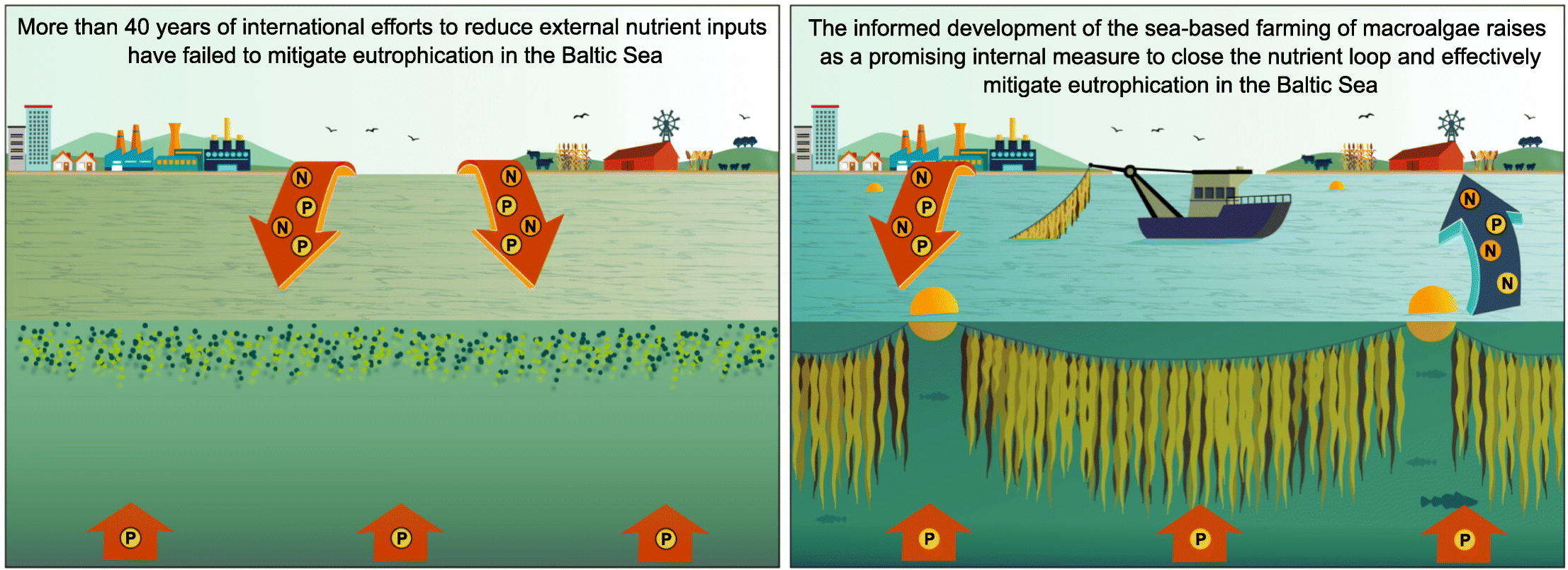
Figure 1. Removal of nutrients from the sea by cultivation of macroalgae, also called regenerative ocean farming (Kotta et al., 2022).
As stated above, the external loading is now much lower than it used to be. In Finland, the amount of nutrients from point sources decreased by 38% for nitrogen and 54% for phosphorous between 1995 – 2016 (Räike et al., 2020). Despite these great achievements, the Baltic Sea still suffers from eutrophication in 2026. Lately, some innovative measures for removing nutrients directly from the sea, to complement the work of reducing the loading from land, has been proposed. Kotta et al. (2022) assessed the potential of cultivating macroalgae to remove nutrients from the Baltic Sea, an activity called regenerative ocean farming (see Figure 1). They describe it as a win-win scenario, since macroalgae need nutrients to grow and the Baltic Sea is suffering from excess nutrients. To remove the nutrients bound by the macroalgae, the biomass must be valorized into products and used on land. However, the extent of cultivation of macroalgae in the Baltic Sea is very limited. This is mostly due to low salinity, harsh winters, and the lack of historic traditions. According to Suutari et al. (2017), the tradition of cultivating macroalgae is more common in the rest of the world, especially in Asia. They also presented reports where large-scale cultivation of macroalgae has improved the water quality. This blog focuses on the Central Baltic and especially the coast of Finland. Located here is, for example, Finland’s last environmental hotspots presented by HELCOM: The Archipelago Sea, which suffers from severe eutrophication (Albrecht et al., 2025).
The aim of this blog is to present the research question of my PhD research: “Can cultivation of macroalgae have a positive impact on the water quality in the Baltic Sea and can this be done in an economically viable way?”. The question is approached by reviewing examples of macroalgae cultivation in the Baltic Sea, including research, projects and companies. The last chapter also presents the other projects on Arcada UAS that aim to improve the state of the Baltic Sea.
Regenerative Baltic Sea farming
Starting with research, Kotta et al. (2022) presented two macroalgae species that have potential for cultivation in the Baltic Sea: Gutweed (Ulva intestinalis) and bladderwrack (Fucus vesiculosus), shown in Figures 2 and 3, respectively. Reports show that both can be cultivated vegetatively in cages instead of the more traditional long-line systems (Meichßner, 2021; Adler et al., 2025). The vegetative approach offers a simpler operation because it doesn’t require a separate land-based hatchery that is associated with traditional sea-based cultivation methods, such as long-line cultivation (see Figure 1). This method, however, needs more research to prove its viability in the Baltic Sea. Nonetheless, on the Estonian island of Ruhnu there have been projects showing that small-scale cultivation of bladderwrack and gutweed is possible (Runö experimentella algfarm – miljöstudier., 2025). Inspired by these pilot studies, I plan to research more on the topic.
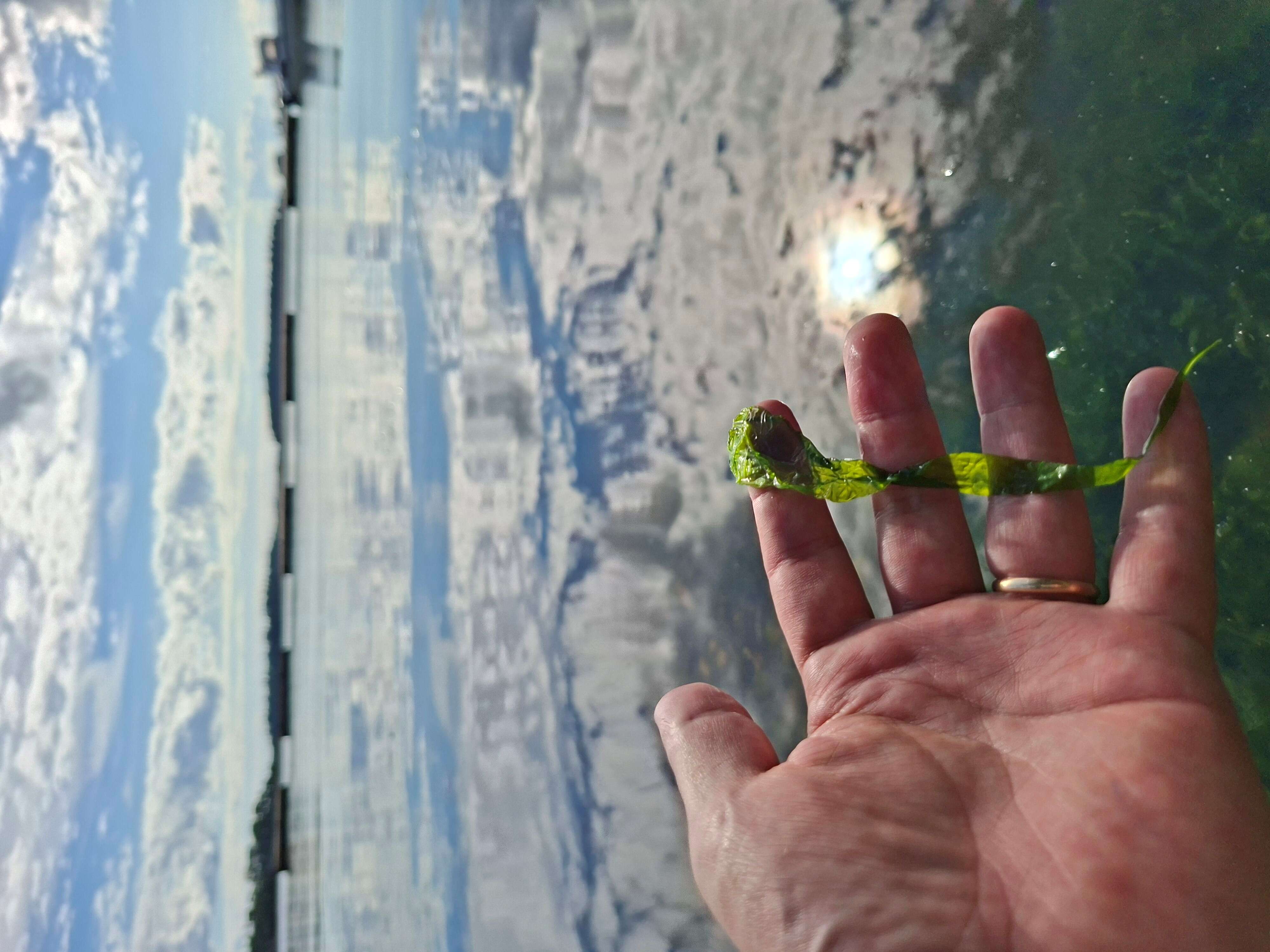
Figure 2. Gutweed (Ulva intestinalis).
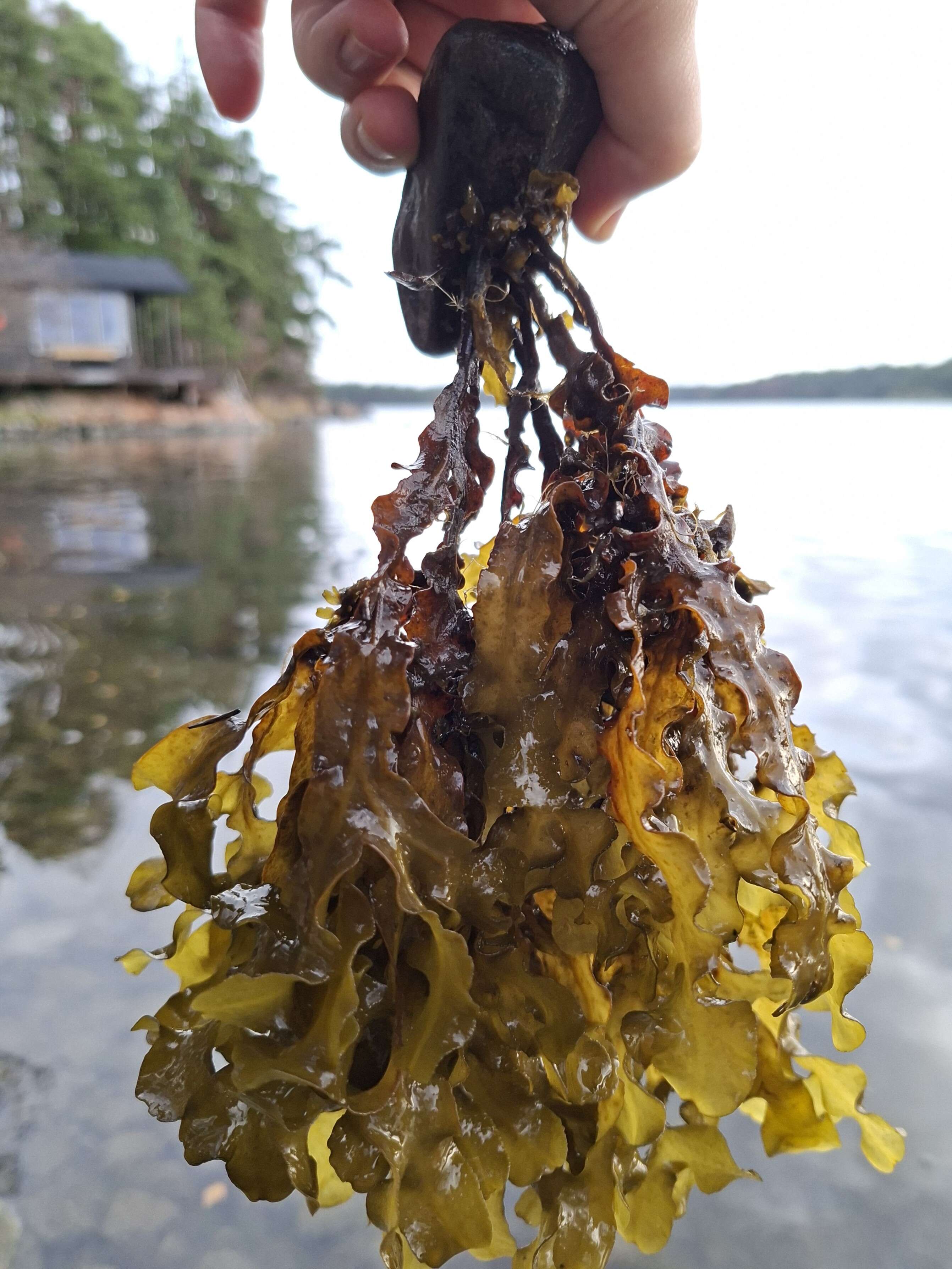
Figure 3. Bladderwrack (Fucus vesiculosus).
On the product side, the Finnish company Origin by Ocean is exploring the possibility to cultivate bladderwrack as raw material for their upcoming biorefinery. Their products consist of high-value bioactive compounds that can replace fossil-based raw materials (Project Baltic Sea | Origin by Ocean, 2026). High-value products are needed to finance the high cost of cultivating macroalgae in the Baltic Sea especially since it is not yet an established economic activity. The company Est-Agar, located on Saaremaa, has been collecting clawed fork weed since 1966 (Furcellaria lumbricalis) and refining it into furcellaran, also known as vegan gelatine. They have also started trials to cultivate the clawed fork weed instead of collecting it from nature (ERR, 2024). Also in this case, the plan is to use the vegetative cage-based approach. This example proves that a viable macroalgae business can work in the Baltic Sea, but so far, it relies on harvesting from wild stock which limits the size of the enterprise.
Another company at Saaremaa, Vetik, is also using the abundant clawed fork weed as feedstock in their operations. They, on the other hand, are producing biostimulants from the harvested macroalgae (Story - Vetik, 2026). In the project Baltic Biostimulants, the two Finnish companies Under Ytan and Nemo Seafarms, have been piloting the cultivation of Mermaid’s hair (Cladophora glomerata) and the collection of beach cast on the southern coast of Finland (Project Baltic Biostimulants, 2025). Also in this case, the final product is a biostimulant.
These cases imply that there is a possibility to cultivate macroalgae in the Baltic Sea. In my PhD studies I aim to analyse similar cases using techno-economic analysis and life cycle assessment. The outcome will be more knowledge of the economic viability and the environmental impact of macroalgae cultivation in the Baltic Sea. The studies are being carried out as part of the project called Marine biomass as a nature-based solution to the eutrophication of the Baltic Sea, which is funded by Fonden för teknisk undervisning & forskning. This research project is part of a wider group of Arcada projects that explore how the use of marine resources can contribute to a healthier Baltic Sea.
Arcada projects for a healthier Baltic Sea
At Arcada UAS we are now experiencing a wave of projects with the aim of improving the state of the Baltic Sea. The common factor for the projects is that they all involve companies and promote economically viable business that are also good for the environment. We believe that this is needed to keep the activities running even after the projects have ended. The projects also involve students, which provides mutual benefits for the quality of the education and the societal impact of the projects. The projects are briefly presented below:
WAVE: Waste to Valuable Materials to address the Marine Cold Climate Challenge aims to strengthen the Nordic bioeconomy by addressing sustainability challenges through cross-border collaboration, education, and innovation. The initiative focuses on marine waste valorization, sustainable resource use, and circular economy principles, bringing together students, researchers, and industry partners from across the Nordic and Baltic regions. The project is funded by Nordplus Horizon. The main challenges identified and addressed by the project are:
- Nutrient recovery and eutrophication mitigation
- Marine biomass cultivation and harvesting
- Biorefinery and green extraction technologies
- Bio-based materials, polymers and textiles
- Circular economy and resource recovery
- Environmental monitoring and biodiversity impact
- Business models and value-chain development
- Life-cycle assessment and techno-economic analysis
ReCreateBiobased develops practical ways to turn underutilised local biomass, such as common reed, into new valuable materials and products. The project tests how biomass and material side streams can be collected, processed, reused, and returned into use instead of becoming waste. The project is co-funded by the EU Interreg Central Baltic Programme.
Reed2Market aims to generate scientific and technical knowledge on reed-based polymer composites to support SMEs in their product development towards use in industrial applications. The project is co-funded by Business Finland.
Stewardship in the Baltic Blue Bioeconomy asks what happens to environmental care and nature when it is turned to assets and financial accounts, following the work of initiatives like the Nordic Nature Market Initiative, a non-profit association bringing businesses, landowners, academia, public actors and civil society together to build credible and transparent nature markets across the Nordics, alongside projects such as BalticReed reed-harvesting case. The project is funded by A.F. Lindstedts & Svenska handelsinstitutets fond för handelsutbildning.
These projects are all aligned with Arcada's strategic focus on research in the field of Circular economy and contribute to Arcada’s work for a sustainable development of our society.
With this blog I hope to open up the research question that is inspiring me: “Can cultivation of macroalgae have a positive impact on the water quality in the Baltic Sea and can this be done in an economically viable way?” I think economic activity can enhance the environment rather merely limit the harm it causes. This would mean working with nature instead of taking from nature. By using proven scientific methods to assess the potential of this activity I hope to contribute to the scientific community and to contribute to the sustainability of society as a whole.
Author: Rasmus Björkvall, PhD student and Laboratory Engineer with Project tasks.
Co-authors: Paula Linderbäck, Principal Lecturer in Circular Economy. Tomas Träskman, Principal Lecturer. Susanna Forssell, Circular Materials Project Lead
References
Adler, I., Martin, G., Kovalchuk, N., Orav-Kotta, H., Vene, K., Tuvikene, R., & Kotta, J. (2025). Exploring the Cultivation of Ulva intestinalis in Low-Salinity Environments of the Baltic Sea. Oceans, 6(2), 30. https://doi.org/10.3390/oceans6020030
Albrecht, E., Belinskij, A., & Heikkilä, E. (2025). Policy coherence for ecosystem-based management: Implementing EU water and marine policies in the Archipelago Sea. Marine Policy, 171, 106427. https://doi.org/10.1016/j.marpol.2024.106427
ERR, M. M. |. (2024, June 26). Saaremaa farm grows rare red seaweed in cold Baltic Sea waters. ERR. https://news.err.ee/1609381655/saaremaa-farm-grows-rare-red-seaweed-in-cold-baltic-sea-waters
Kotta, J., Raudsepp, U., Szava-Kovats, R., Aps, R., Armoskaite, A., Barda, I., Bergström, P., Futter, M., Gröndahl, F., Hargrave, M., Jakubowska, M., Jänes, H., Kaasik, A., Kraufvelin, P., Kovaltchouk, N., Krost, P., Kulikowski, T., Kõivupuu, A., Kotta, I., … Barboza, F. R. (2022). Assessing the potential for sea-based macroalgae cultivation and its application for nutrient removal in the Baltic Sea. Science of The Total Environment, 839, 156230. https://doi.org/10.1016/j.scitotenv.2022.156230
Meichßner, R. (2021). Aquaculture of Fucus species in the Baltic Sea by means of vegetative reproduction. https://macau.uni-kiel.de/receive/macau_mods_00002038
Naumov, L., & Meier, H. E. M. (2026). Major Baltic Inflows do not have long-lasting consequences for 20th-century hypoxia in the central Baltic Sea. Communications Earth & Environment, 7(1), 205. https://doi.org/10.1038/s43247-026-03245-0
Project Baltic Biostimulants. (2025). Underytan.Fi. https://www.underytan.fi/project-ballticbiostimulants
Project Baltic Sea | Origin by Ocean. (2026). https://www.originbyocean.com/project-baltic-sea
Räike, A., Taskinen, A., & Knuuttila, S. (2020). Nutrient export from Finnish rivers into the Baltic Sea has not decreased despite water protection measures. Ambio, 49(2), 460–474. https://doi.org/10.1007/s13280-019-01217-7
Runö experimentella algfarm – miljöstudier. (2025, December 29). Ruhnu Rootsi. https://kultuur.ruhnu.ee/vara-projekter/algfarm-miljostudier
Story—Vetik. (2026). https://vetik.eu/story/
Suutari, M., Leskinen, E., Spilling, K., Kostamo, K., & Seppälä, J. (2017). Nutrient removal by biomass accumulation on artificial substrata in the northern Baltic Sea. Journal of Applied Phycology, 29(3), 1707–1720. https://doi.org/10.1007/s10811-016-1023-0
Systems, M. (2025, June 2). Planet Ruhnu and the seaweed vision. Eurofish. https://eurofish.dk/planet-ruhnu-and-the-seaweed-vision/
Vahtera, E., Conley, D. J., Gustafsson, B. G., Kuosa, H., Pitkänen, H., Savchuk, O. P., Tamminen, T., Viitasalo, M., Voss, M., Wasmund, N., & Wulff, F. (2007). Internal Ecosystem Feedbacks Enhance Nitrogen-fixing Cyanobacteria Blooms and Complicate Management in the Baltic Sea. AMBIO: A Journal of the Human Environment, 36(2), 186–194. https://doi.org/10.1579/0044-7447(2007)36%5B186:IEFENC%5D2.0.CO;2
Engineering and Technology blog
Are you curious about the latest technologies on IT, AI, Big data, robotics, sustainable materials and the newest technologies and production?

