
Guardians of patient safety: The importance of healthcare students’ research and AI literacy
Published : 03.06.2026 / Publication / Blog
Healthcare students need research and AI literacy to navigate low-quality studies, fake citations, and AI-generated misinformation. Higher education must systematically embed these skills in curricula, preparing graduates to critically evaluate evidence and AI tools, and safeguard patient safety.
In 2023, Van Noorden published an article in Nature highlighting that medicine is plagued by untrustworthy clinical trials. As many as 44% of 150 trials surveyed contained at least some flawed data, manifested as impossible statistics, incorrect calculations or duplicated numbers or figures.
Furthermore, 26% of those studies had problems that were widespread leading to them being impossible to trust, either because of researchers’ incompetence or straight fraudulence. The article concluded that such so-called ‘zombie’ trials have a semblance of real research, but closer scrutiny showed they were “hollow shells, masquerading as reliable information” (Van Noorden, 2023). A recent study published in The Lancet revealed a troubling new dimension to this crisis: the contamination of the scientific record by AI-generated fabricated citations – references that point to papers which do not exist. Alarmingly, the frequency of such hallucinated citations rose sixfold between 2023 and 2025, and by early 2026 reached a rate of approximately one in every 277 published papers (Topaz et al., 2026).
These are not isolated failures confined to a single discipline; they reflect systemic pressures that cut across all academic fields. This is especially relevant in the AI-marinated time we are living in, where the integrity of research meets the pressure for productivity, so often alleviated by hallucinating and shallow AI. (Bradshaw, 2026) For our healthcare students, both on undergraduate and master’s level, this has already become a reality. Therefore, as higher education institutions, we are obliged to give them competencies to manage AI and research literacy.

Preparing healthcare students for today’s practice through research literacy
For students in the healthcare sector, evidence-based practice (EBP) is considered a fundamental core in their fields. Research literacy underpins this evidence-based practice, critical thinking, and clinical decision-making. This directly translates to safer, more effective clinical practice (Jeong et al., 2024; Patelarou et al., 2020). It is furthermore important to understand research literacy as not just about “reading research papers”, but the ability to formulate feasible research questions, search systematically, appraise research methods, and interpret statistics from papers they find, and apply these findings ethically in context. When students on bachelor’s or master’s level lack this foundation, they are more vulnerable to misinformation, marketing claims, and uncritical adoption of new technologies, including AI tools, in clinical settings (Farokhzadian et al., 2021; Jeong et al., 2024; Patelarou et al., 2020)
However, studies of practicing nurses highlight that inadequate information literacy, and search skills remain a major barrier to implementing EBP. Many students start off without foundational research process, statistical, critical appraisal, or database navigation skills, leading to understandable frustration when tackling studies. Surveys report that over 70% of them feel underprepared. (Kyaw Soe et al., 2018; Wang et al., 2022) Adding to this, heavy clinical studies, exams, and placements leave little room for any research training. Studies further show that up to 80% of healthcare students are citing lack of time as the top obstacle. (Hou et al., 2025; Kyaw Soe et al., 2018) This problem might also be enhanced by the “methodology monster”, a sense that methodology and research methods are something scary, practiced by far-away faculty research wizards, using incomprehensible languages and statistical tools, which undergraduate students cannot possibly grasp. This sense can also easily be exasperated by overly difficult or complex educational approaches. (Papanastasiuo et al, 2008)

Recent systematic reviews in nursing education by Jeong et al. (2024) and Patelarou et al. (2020) have shown that structured EBP teaching improves nursing students’ EBP knowledge, critical thinking, and readiness to apply research in their practice. Nursing students trained in EBP, through research literacy interventions, showed significant improvements in their EBP competencies, enabling them to quickly appraise studies and apply findings during complex patient scenarios. (Cardoso et al., 2021) Research-literate healthcare students have also been able to critically evaluate conflicting claims, such as distinguishing pharmaceutical marketing from peer-reviewed trials on drug efficacy, reducing the risk of adopting unproven treatments that harm patients. (Adebisi, 2022a; Lee et al., 2021)
This all indicates that research literacy capacities must be built systematically in students’ undergraduate curricula starting from first year, then further advanced later, and during master’s studies, while being presented in manners that students can comprehend and find practically useful. Evidence further supports the idea that for research literacy to be effective and meaningful, it needs to be authentic and contextually grounded. (Hosier, 2024). This has implications not only for course planning but also for faculty development. These highlight the major arguments for why research methodology courses are a mandatory part of our healthcare degree curriculums on all degree levels at Arcada University of Applied Sciences; not simply to prepare students for their thesis work, but to prepare them for their complex practice. Furthermore, students who complete high-quality research projects are more likely to pursue postgraduate research careers and innovate in practice, which is a definitive advantage for both students and their profession. (Adebisi, 2022b)
AI as a catalyst for redefining research literacy
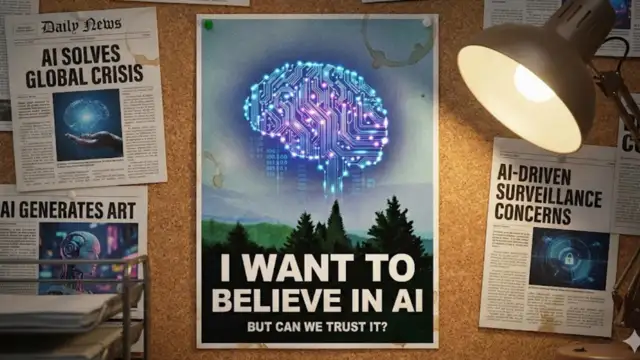
AI is rapidly becoming part of our contemporary healthcare delivery, having infiltrated, among others, diagnostics, triage, and clinical decision support. A recent systematic review on AI in health professions education by Feigerlova et al. (2025) found growing experimentation with AI-based teaching tools, but the evidence for clear educational benefits is still limited and often methodologically weak. This gap reinforces the need for graduates who can interrogate claims about AI systems using research literate, evidence-based lenses, rather than fall for every bubble and hype pushed through.
Furthermore, when it comes to knowledge construction and research, AI sits awkwardly between instrument and collaborator. AI tools do not just calculate or present; they compose information. That makes it tempting to anthropomorphizs them, to treat them like “fellow research assistants”. (Kardong-Edgren, 2026). This is a danger zone, as AI (in this case, specifically large language models) often generate strong and plausible sounding analyses with convincing responses. These can easily seduce the novice researcher. We dare you try to get any LLM to respond to your prompt with “I cannot answer that question.” We are also easily oblivious to the quality of these responses. To quote Kiron Ravindran: “When a calculator malfunctions, the errors are likely quite obvious. But when ChatGPT fabricates plausible-sounding analysis in domains you personally don’t understand, the failure goes undetected.” (Ravindran, 2025)
Another question is replication, which is a cornerstone of science. If results cannot be reproduced, we call the findings unstable. Our dear “research assistant” ChatGPT, CoPilot, Claude, or Perplexity undeniably mutates between drafts due to constant model shifts. Such temporal variability undermines reproducibility. A study using an LLM in March 2024 may not be replicable in March 2025, even with identical prompts. Students and faculty alike need strong competencies to evaluate AI as knowledge instruments and producers. We also need to clearly understand that “I used ChatGPT to aid in my questioning” is simply not enough. (Kardong-Edgren, 2026)
Luckily, AI literacy is becoming a core competency for future health professionals. Students’ AI literacy has been shown to associate with their attitudes to AI and their intention to use AI in clinical practice. (Hopson et al., 2025) Short, well-designed AI education interventions for undergraduate healthcare students can significantly improve AI knowledge, practical skills (for example, data handling and imaging tasks), and understanding of pathology, suggesting that AI concepts can be meaningfully introduced even before formal clinical training. (Si, 2025)
Considering this, AI literacy does not replace research literacy; it multiplies the situations where research literate judgment is needed. Thus, at Arcada we also need to address it even more strongly by integrating it into early research literacy studies and by integrating AI and research literacy-based tasks more explicitly into our clinical courses. A reminder though: we need to be mindful to not equate AI literacy as merely a set of shallow instrumental AI techniques, such as how to prompt, or how to detect AI hallucinations (i.e. the how), but actually understand the conditions under which the systems operate, and what ideological formations shape and produce the data that AI is built on (i.e. the why).

Towards “AI aware” research literacy competencies
There are several examples of literacy training, which illustrate a shift from merely teaching students to “find and read papers” towards helping them to, among others, formulate clinical and learning questions, critically evaluate AI outputs against primary research and methodological standards, and recognise bias, data limitations, and ethical issues in both research and AI systems. (Feigerlova et al., 2025; Naamati-Schneider, 2024) Flipped classroom strategies with quizzes and experiments have shown to equip nursing students with confidence to integrate research into routine care, closing gaps between theory and bedside application. (Lee et al., 2021)
Recent reviews further recommend explicitly embedding AI content, alongside EBP and information literacy, across healthcare curricula. Suggested directions include introducing AI concepts early, aligning them with core research methods teaching, and addressing ethical and regulatory aspects of AI in practice. At the same time, the literature warns that current AI in education evidence is sparse and often small-scale, so institutions should evaluate AI-related teaching innovations rigorously rather than simply assuming benefit. (Feigerlova et al., 2025; Shishehgar et al., 2025)
In a time where clinical decisions and healthcare systems may be shaped as much by algorithms as by research (of varying quality, as noted in the start) and marinated by (sometimes unscrupulous) use of AI, our future research literate graduates will become guardians of their patients’ evidence-based care, and the increasing promises and risks of artificial intelligence in healthcare. This makes for a strong argument to strengthen research and AI literacy, and EBP competencies as non-negotiable foundations for patient safe practice (Farokhzadian et al., 2021; Jeong et al., 2024; Patelarou et al., 2020), so students can critically appraise not only journal articles, but also AI driven tools and claims they will encounter throughout their careers. Our students need to be able to see behind the proverbial curtains of hype-words, trends and false claims. And we, the faculty, need competencies to teach them how to do it.
The authors have on 22.2. used Perplexity AI Free version (Pro Search and Deep Research functions) to find relevant research material around the topics, and to textually summarise some points in the text. All AI-produced materials were checked and revised by the authors. The authors also used Google Gemini 3 to create some of the images.
Christoffer Ericsson, Degree Programme Director (EmergencyLead), Senior Lecturer
Jonas Danielsson, Degree Programme Director (Healthcare Leadership), Principal Lecturer
Maria Appelroth, Degree Programme Director (Nursing), Senior Lecturer
Pernilla Stenbäck, Degree Programme Director (Midwifery), Senior Lecturer
Anu Nyberg, Degree Programme Director (Public Health Nursing), Senior Lecturer
Niko Loimijoki, Degree Programme Director (Emergency Care), Senior Lecturer
References
Adebisi, Y. A. (2022a). Undergraduate students’ involvement in research: Values, benefits, barriers and recommendations. Annals of Medicine and Surgery, 81, 104384. https://doi.org/10.1016/j.amsu.2022.104384
Adebisi, Y. A. (2022b). Undergraduate students’ involvement in research: Values, benefits, barriers and recommendations. Annals of Medicine and Surgery, 81, 104384. https://doi.org/10.1016/j.amsu.2022.104384
Bradshaw, T. J. (2026). AI Disclosure Policies: Are We Rearranging Deck Chairs on the Titanic? Journal of Nuclear Medicine. https://doi.org/10.2967/jnumed.125.271870
Cardoso, D., Couto, F., Cardoso, A. F., Bobrowicz-Campos, E., Santos, L., Rodrigues, R., Coutinho, V., Pinto, D., Ramis, M.-A., Rodrigues, M. A., & Apóstolo, J. (2021). The Effectiveness of an Evidence-Based Practice (EBP) Educational Program on Undergraduate Nursing Students’ EBP Knowledge and Skills: A Cluster Randomized Control Trial. International Journal of Environmental Research and Public Health, 18(1), 293. https://doi.org/10.3390/ijerph18010293
Farokhzadian, J., Jouparinejad, S., Fatehi, F., & Falahati-Marvast, F. (2021). Improving nurses’ readiness for evidence-based practice in critical care units: Results of an information literacy training program. BMC Nursing, 20, 79. https://doi.org/10.1186/s12912-021-00599-y
Feigerlova, E., Hani, H., & Hothersall-Davies, E. (2025). A systematic review of the impact of artificial intelligence on educational outcomes in health professions education. BMC Medical Education, 25, 129. https://doi.org/10.1186/s12909-025-06719-5
Hopson, S., Mildon, C., Hassard, K., Kubalek, C., Laverty, L., Urie, P., & Corte, D. D. (2025). Enhancing AI literacy in undergraduate pre-medical education through student associations: An educational intervention. BMC Medical Education, 25, 999. https://doi.org/10.1186/s12909-025-07556-2
Hou, Y., Hu, L., Qiu, S., Yan, Z., Zhou, M., Zheng, F., Li, Z., Ke, X., & Huang, Y. (2025). Perceptions, attitudes, and barriers to research engagement among general medicine undergraduates in a tertiary hospital in Guangdong, China. BMC Medical Education, 25, 773. https://doi.org/10.1186/s12909-025-07343-z
Hosier, A. (2024) "An Exploratory Study of Research Contexts for Information Literacy Instruction". University Libraries Faculty Scholarship. 206. https://scholarsarchive.library.albany.edu/ulib_fac_scholar/206
Jeong, D., Park, C., Sugimoto, K., Jeon, M., Kim, D., & Eun, Y. (2024). Effectiveness of an Evidence-Based Practice Education Program for Undergraduate Nursing Students: A Systematic Review and Meta-Analysis. International Journal of Environmental Research and Public Health, 21(5), 637. https://doi.org/10.3390/ijerph21050637
Kardong-Edgren, S. (2026). Epistemic instability and the mirage of consistency in generative AI research. Clinical Simulation In Nursing, 110. https://doi.org/10.1016/j.ecns.2025.101870
Kyaw Soe, H. H., Than, N. N., Lwin, H., Nu Htay, M. N. N., Phyu, K. L., & Abas, A. L. (2018). Knowledge, attitudes, and barriers toward research: The perspectives of undergraduate medical and dental students. Journal of Education and Health Promotion, 7, 23. https://doi.org/10.4103/jehp.jehp_61_17
Lee, G. S. J., Chin, Y. H., Jiang, A. A., Mg, C. H., Nistala, K. R. Y., Iyer, S. G., Lee, S. S., Chong, C. S., & Samarasekera, D. D. (2021). Teaching Medical Research to Medical Students: A Systematic Review. Medical Science Educator, 31(2), 945–962. https://doi.org/10.1007/s40670-020-01183-w
Naamati-Schneider, L. (2024). Enhancing AI competence in health management: Students’ experiences with ChatGPT as a learning Tool. BMC Medical Education, 24, 598. https://doi.org/10.1186/s12909-024-05595-
Papanastasiou, E. C., & Zembylas, M. (2008). Anxiety in undergraduate research methods courses: Its nature and implications. International Journal of Research & Method in Education, 31(2), 155–167. https://doi.org/10.1080/17437270802124616
Patelarou, A. E., Mechili, E. A., Ruzafa-Martinez, M., Dolezel, J., Gotlib, J., Skela-Savič, B., Ramos-Morcillo, A. J., Finotto, S., Jarosova, D., Smodiš, M., Mecugni, D., Panczyk, M., & Patelarou, E. (2020). Educational Interventions for Teaching Evidence-Based Practice to Undergraduate Nursing Students: A Scoping Review. International Journal of Environmental Research and Public Health, 17(17), 6351. https://doi.org/10.3390/ijerph17176351
Ravindran, K. (2025, June 9). Is AI Creating Incompetent Experts? IE Insights. https://www.ie.edu/insights/articles/is-ai-creating-incompetent-experts/
Shishehgar, S., Murray-Parahi, P., Alsharaydeh, E., Mills, S., & Liu, X. (2025). Artificial Intelligence in Health Education and Practice: A Systematic Review of Health Students’ and Academics’ Knowledge, Perceptions and Experiences. International Nursing Review, 72(2), e70045. https://doi.org/10.1111/inr.70045
Si, J. (2025). Exploring AI literacy, attitudes toward AI, and intentions to use AI in clinical contexts among healthcare students in Korea: A cross-sectional study. BMC Medical Education, 25, 1233. https://doi.org/10.1186/s12909-025-07766-8
Topaz M, Roguin N, Gupta P, Zhang Z, Peltonen L-M. (2025). Fabricated citations: an audit across 2·5 million biomedical papers. The Lancet, 407, 1779-1781
Van Noorden, R. (2023). Medicine is plagued by untrustworthy clinical trials. How many studies are faked or flawed? Nature, 619(7970), 454–458. https://doi.org/10.1038/d41586-023-02299-w
Wang, X., Xia, L., & Duan, Q. (2022). The barriers and informational needs of students and junior researchers when reading scientific papers. Learned Publishing, 35(3), 308–320. https://doi.org/10.1002/leap.1475
Health and Welfare
Welcome to the Health and Welfare blog where Arcada researchers, teachers and students write about topics related to education, research, development and innovation at Arcada.
