
Future-oriented solutions for a circular society: Insights from CHARLO 2026 in Oslo
Published : 18.08.2026 / Publication / Blog
Through real-life business cases, international teamwork, and the Circulab methodology, CHARLO 2026 showed how sustainability goes beyond environmental action. The programme highlighted the importance of social inclusion, regenerative thinking, and collaborative innovation in shaping resilient Nordic futures.
Background
Organisations today face an increasing need for circular and sustainable solutions that create long-term value for both businesses and society (Sitra, 2022). CHARLO addresses this need by bringing together students, teachers, and companies willing to co-create future-oriented solutions. CHARLO stands for Change Agents for Regional and Local Organisations, and this year the focus was on circular economy and a sustainable future. CHARLO had participants from different Baltic and Nordic higher education institutions, in total 53 participants including students and teachers from Estonia, Finland, Iceland, Latvia, Lithuania, Norway, Sweden, and Denmark. The intensive week was a week of collaboration with Nordplus higher education institutions as well as an action of the EkotekNord network, and was financially supported by Nordplus Higher Education.
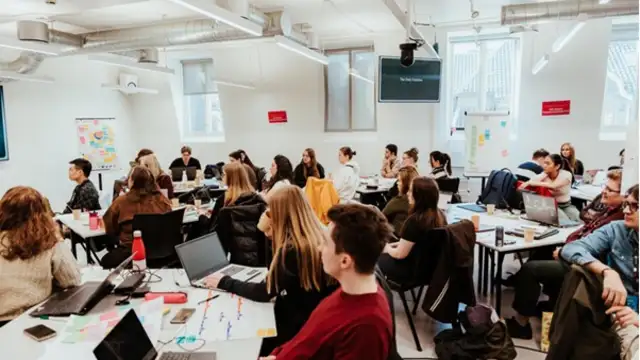
Fig. 1. Student teams working on the company cases in Oslo April 2026.
Eight cross-institutional teams (Fig. 1) collaborated with two companies in Oslo; Oslo Airport City (OAC) and OsloKollega with Strawberry Group. The companies presented the students with diverse cases to work on. This blog post documents the sustainability journey with CHARLO 2026 in Oslo, and how the student teams approached the given cases with an emphasis on sustainability.
The Nordic path to circular economy and sustainability
The circular economy (CE) has become a central framework for addressing environmental, economic, and social sustainability challenges in urban and regional development. Recent European policy developments continue to strengthen this transition, particularly through the updated Circular Economy Action Plan, which emphasises decoupling economic growth from resource consumption and improving systemic resource efficiency across industries (European Commission, 2024). However, despite strong policy momentum, literature also highlights that CE implementation often varies significantly across sectors and regions, suggesting a gap between policy ambition and practical execution.
Nordic countries, including Finland, Sweden, and Denmark, are frequently identified as frontrunners in circular transition due to strong governance frameworks and innovation ecosystems (Sustainable Development Solutions Network, 2025). Similarly, Baltic countries such as Estonia, Latvia, and Lithuania have increasingly integrated circular economy objectives into regional development strategies, particularly through digital innovation, waste reduction initiatives, and EU-supported sustainability programmes (European Commission, 2024; Nordic Council of Ministers, 2021). Nevertheless, comparative research suggests that even leading regions face challenges in scaling circular solutions beyond pilot projects and ensuring consistent cross-sector implementation.
The Nordic region provides strong empirical evidence of circular economy adoption at both national and regional levels. Finland represents a leading example through its Circular Economy Green Deal and its national objective of carbon neutrality by 2035. The country consistently ranks among the top global performers in sustainability development, reflecting integration of circular principles into national economic strategy (SDSN, 2025; Ministry of the Environment of Finland, 2024). Finnish companies illustrate this development in practice. Sponda demonstrates circular real estate strategies through emission-free energy systems and high environmental certification rates, while Sweco applies urban mining principles by treating buildings as material banks and promoting design for disassembly (Sweco, 2022). These cases demonstrate how circular principles are operationalised in the built environment, while also reflecting the importance of infrastructure-level change rather than isolated organisational initiatives.
Beyond construction, circular economy principles are increasingly applied in service sectors such as hospitality and tourism. GreenStar Hotels represents a circular hospitality model based on resource efficiency, renewable energy use, and value-based service design. At the urban scale, the Lahti region demonstrates circular economy implementation through high waste recovery rates and its long-term goal of becoming a zero-waste city (European Commission, 2019; City of Lahti, 2021). However, literature also suggests that service-sector circularity is often more dependent on behavioral change and operational design choices than on technological innovation alone, making scalability and consistency key challenges.
Overall, recent literature and Nordic-Baltic empirical evidence demonstrate that the circular economy has evolved into a multi-dimensional framework integrating environmental regeneration, economic innovation, and social sustainability (Geissdoerfer et al., 2017; Circle Economy, 2024). However, it is increasingly recognised that CE remains a transitional and unevenly implemented model, shaped by sectoral differences, governance capacity, and stakeholder alignment (European Environment Agency, 2024).
Methodology and tools: The Circulab approach
The methodological foundation of IP CHARLO 2026 was the Circulab framework, a systemic design methodology developed to transition organisations from linear economic systems to circular and regenerative models. Unlike conventional business methods focused strictly on short-term profitability, Circulab integrates broader ecological and social considerations into organisational design. It forces teams to evaluate how economic activities influence ecosystems, communities, and long-term resource use through collaborative value creation (Circulab, 2024).
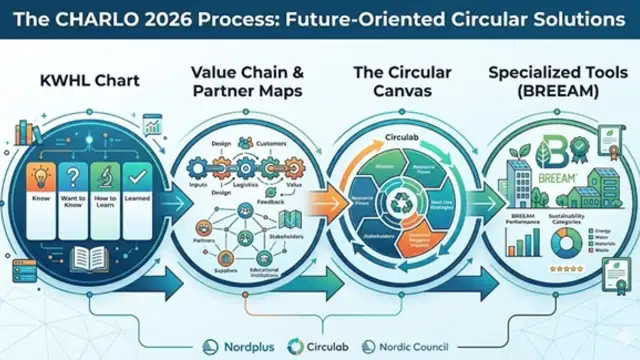
Fig. 2. The CHARLO 2026 process (AI generated image from Gemini).
The process followed a structured, data-driven progression from foundational research to advanced ecosystem mapping with a use of relevant tools. (Fig. 2).
1. The first step included initial research and stakeholder engagement where student teams conducted field interviews, site visits, benchmarking studies, and operational analyses. To organise this data, teams utilised the KWHL Chart (What I Know, What I Want to Know, How I Will Learn, What I Learned, CBES Consulting, 2026). This tool structured research strategies prior to fieldwork and ensured an evidence-based, reflective learning process.
2. In the second step student teams did a systems mapping where teams used Value Chain Canvases and Partner Maps to visualise relationship dynamics between stakeholders, suppliers, operational processes, infrastructure, and resource flows. Rather than looking at isolated organisational outputs, these mapping tools exposed inefficiencies, missing links, and hidden opportunities for circular collaboration within the broader ecosystem (Osterwalder & Pigneur, 2010).
3. Next student teams focused on a holistic circular business design where the Circular Canvas served as the primary and summative innovation framework. Moving beyond the traditional Business Model Canvas (which isolates customers, revenue, and costs), the Circular Canvas explicitly incorporates positive impacts, negative externalities, and the future lifecycle of products and materials. This allowed student teams to co-design business models that prioritise resilience and long-term ecological health alongside economic value (Circulab, 2024).
4. Finally, the above-mentioned BREEAM tools were used (by some student teams) to evaluate how a company's facilities support circular economy goals. Especially Team 2, a team that worked on the OAC case (see below) used these the look into how the company manages materials and resources.
The company cases and solutions
Oslo airport city (OAC) - a focus on green logistics & Infrastructure
OAC is a real estate developer located next to Oslo airport in Gardermoen. OAC challenged the students to identify industries and companies that benefit from the proximity to the airport while integrating sustainability considerations.
Challenge: Transform OAC from a standard logistics park into a specialised, sustainable airport ecosystem. Benchmarking showed that OAC lacked competitive, airport-dependent clusters that capitalised on rapid transportation and high-security infrastructure.
Findings: Operational analysis identified pharmaceutical and life-science logistics as a major growth sector. However, this industry heavily relies on high-energy, cold-chain storage and time-sensitive transport, contributing significantly to air freight CO2 emissions.
Solution: The establishment of a dedicated, GDP-compliant (Good Distribution Practice) pharmaceutical and life-science logistics cluster. Rather than attempting to eliminate global transport, the solution optimises resource efficiency and system infrastructure (Geissdoerfer et al., 2017). An infrastructure design which expands the ecosystem layout to include integrated solar roofs, green roof ecosystems, and adaptive, modular construction systems for future reuse was also suggested. Team 2 developed a predictive BREEAM estimation tool allowing planners to design directly toward "Excellent" or "Outstanding" sustainability certification levels, boosting asset value and tenant demand (BRE Group, 2024).
Oslokollega x Strawberry Group: quantifying social sustainability
The OsloKollega x Strawberry Group student team case focused on further developing the existing co-operation of increased employment inclusion for people who are completely or partially outside of the workforce (i.e. for unemployed people).
Challenge: Formulate quantitative methods to measure, track, and validate the social impact of a workforce integration partnership designed for vulnerable and minority backgrounds.
Findings: While the existing co-operation for including people outside the workforce maintained a strong baseline trainee retention rate of 78%, the lack of structured indicators made it impossible to communicate long-term societal value or incorporate findings into standard corporate reporting.
Solution: Developed an Enhanced KPI Framework that successfully translated qualitative social milestones into concrete operational data. Key metrics introduced included:
- Employment Conversion Rate: Percentage of trainees securing permanent employment post-programs.
- Early Dropout Rate: Percentage of participants departing within the first two months.
- Six-Month Retention Rate & Inclusion Rate: Tracking long-term employment stability and demographic representation.
A strategic alignment where the above internal metrics were mapped directly to UN Sustainable Development Goals (SDGs) 4 (Quality Education), 8 (Decent Work and Economic Growth), and 10 (Reduced Inequalities) (United Nations, 2026) was suggested. The suggested framework directly ought to strengthen the organisation's ESG reporting, operational transparency, and stakeholder trust.
Conclusion
Sustainability is not only about environmental actions. In many projects, social sustainability, communication, inclusion, and long-term cooperation are equally important. For example, the collaboration between OsloKollega and Strawberry Group showed how training and employment opportunities can create positive impact both for individuals and for society. At the same time, the Oslo Airport City cases demonstrated how sustainability can also become part of long-term business strategy, innovation, and future competitiveness.
Many of the proposed solutions here were not about creating something completely new. Instead, several student teams focused on improving existing systems, making current processes more efficient, and finding realistic ways to support sustainable development. This made the solutions feel more practical, comprehensive and easier to implement in real organisations.
Overall, the CHARLO demonstrated how valuable collaboration between universities and companies can be when solving complex sustainability challenges. Combining strategic business thinking, modern technology, creativity, and social perspectives helped generate ideas that were both realistic and sustainable. For many of students, CHARLO was not only a project course, but also a chance to better understand how students can actively contribute to real regional and organisational development through meaningful changes. Crucially, the structured methodology provided by the Circulab Circular Toolbox equipped the student teams to look beyond immediate fixes, ensuring that the co-designed solutions are resilient and sustainable. CHARLO Oslo 2026 provided a practical context for interpreting how circular economy theory is operationalized in Nordic regional sustainability settings.
Authors
Christa Tigerstedt, Principal Lecturer in Business, Arcada
Pijush Dutta, Business Management and Transformation student, Arcada
Gopinath Ekambaram, Business Management and Transformation student, Arcada
Emilia Lammela, Business Management and Transformation student, Arcada
Xuan Hieu Thuan Nguyen, Information Technology student, Arcada
References
BRE Group (2024). Building Research Establishment Environmental Assessment Method (BREEAM). https://www.breeam.com
CBES Consulting (2026). Instructional strategies that work. https://cbesconsulting.learnworlds.com/…
Circle Economy (2024). Circularity Gap Report 2024. https://www.circle-economy.com
Circulab (2024). Circular design tools and methodology. Circulab.
Circulab (n.d.). Circular Canvas user manual [PDF]. Circulab.
City of Lahti (2021). Green Lahti – European Green Capital programme. https://www.lahti.fi
Eräpolku, E. (2020). Driving sustainability: Sustainability managers as change agents in Finnish MNEs. Master’s thesis. Helsinki: Aalto University.
European Commission (2024). Circular economy action plan: Progress and implementation update. https://environment.ec.europa.eu
European Environment Agency (2024). Circular economy in urban systems and infrastructure. https://www.eea.europa.eu
Geissdoerfer, M., Savaget, P., Bocken, N. M. P., & Hultink, E. J. (2017). The circular economy – A new sustainability paradigm? Journal of Cleaner Production, 143, 757–768. https://doi.org/10.1016/j.jclepro.2016.12.048
Innovation Gardermoen. (n.d.). Home. Innovation Gardermoen.
Ministry of the Environment of Finland (2024). Circular economy green deal policy brief. https://ym.fi
Nordic Council of Ministers (2021). Nordic-Baltic circular economy cooperation: Strengthening regional transition towards sustainability. Nordic Council of Ministers. https://www.norden.org
Osterwalder, A., & Pigneur, Y. (2010). Business model generation: A handbook for visionaries, game changers, and challengers. John Wiley & Sons.
Sustainable Solutions Development Network (SDSN) (2025). Sustainable development report 2025. https://www.sustainabledevelopment.report
Sitra (2022). Sustainable growth with circular economy business models: A playbook for businesss. Sitra.
Sweco (2022). Circular construction and urban mining insights. Sweco.
United Nations (2026). Sustainable development goals. https://sdgs.un.org
Business blog
Businesses are part of the solutions for a sustainable future, solutions that combine profitability, environmental concerns and social commitment.
