
Engineering a greener future: Arcada student Anton Truss excels in European steel innovation competition
Published : 23.02.2026 / News
Arcada is filled with ambitious, hard-working students. One of them is Anton Truss, a third-year student in the Mechanical and Sustainable Engineering programme. Not only was he the only undergraduate and the youngest participant to get selected to participate in the RACE 2025 competition, but his team also saw major success and placed third.
RACE (Raw and Circular Economy Expedition) ‘brings together Europe’s most promising talents to tackle sustainability and innovation challenges in the raw materials sector ’. In 2025, the focus was on steel. During six days in Gliwice, Poland, Anton Truss and his teammates worked on different ideas relating to areas such as low-emission steel production, energy efficiency, and green technologies within the steel industry.
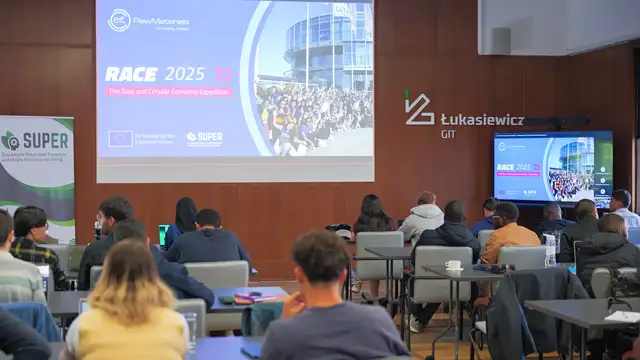
Truss, a 21-year-old Estonian student in the bachelor’s degree programme Mechanical and Sustainable Engineering (MSE), was one of 45 students selected out of almost 200 applicants. He admits he first felt a bit out of place.
‘There were 11–12 teams with three–four people of different backgrounds in each. My teammates were master’s students in material science, chemistry, or engineering. Luckily, they were all gentle and didn’t care about my age. I learned a lot from them, for example in the field of chemistry.’
A winning idea
In the end, Truss’s team E-Weld settled on proposing solutions for preventing energy leakage and improving energy efficiency of factory facilities, more specifically Huta Łabędy, a Polish steel fabricator. Their idea was a combination of installing sensors to spot energy leakages and using material that holds heat for a longer time.
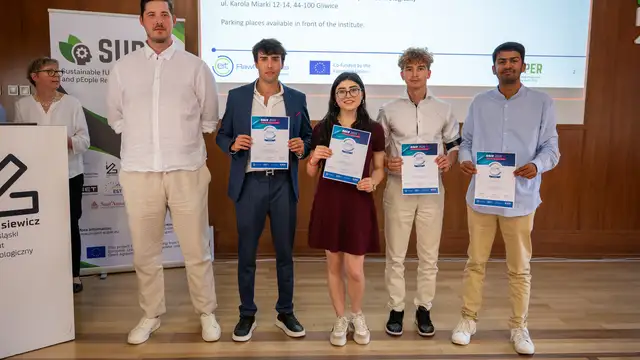
The team’s performance was to the liking of the jury as they placed third, which earned them participation in the European Steel Technology Platform (ESTEP) Annual Conference 2025 in Udine, Italy – a hub for leading experts shaping the future of European steel.
‘The conference brought together leading industry experts, innovative companies, and emerging young professionals to discuss the future of the European steel sector. Key themes included decarbonisation strategies, digital transformation, and circular approaches for developing a more sustainable steel industry,’ Truss says.
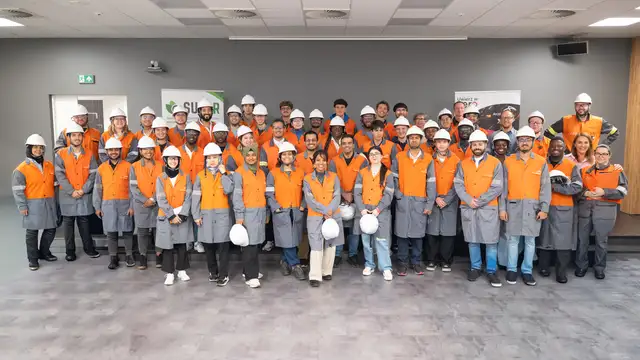
Truss was happy to notice that applying to RACE 2025 not only rendered him a lot of valuable knowledge and experience, but also a new network that he regards highly and keeps in touch with.
‘During RACE I didn’t just get teammates, but also new friends.’
Ambition is key
It was no coincidence that Truss applied to RACE in the first place.
‘I try to participate in as many events as possible to gain as much experience as possible. I also have a competitive streak that helps me excel in my studies.’
Truss is grateful for the active approach of the teachers in the programme. It was teacher Stewart Makkonen-Craig who contacted MSE students and encouraged them to apply. Overall, Truss appreciates that his studies in the MSE programme prepare him for his future work-life.
‘My studies in the first and second year gave a good basis in core engineering: physics, chemistry, and math. The knowledge gained forms a strong foundation and can be applied in my future career.’
He especially appreciates the practical part of his studies.
‘MSE has good courses in 3D modelling, programming, and now I’m taking computer-aided engineering, which I find very interesting and useful. It gives students confidence when they have worked with real applications.’
Truss looks brightly at his future.
‘The point of studying in the MSE programme is to find new ways to improve the world around us. I aim to graduate with good grades and a lot of knowledge, and I hope to find a position in Finland that I genuinely enjoy. Modelling and designing parts interest me the most.’


