
Let’s get our concepts straight: metaverse, Web3 and sustainability
Published : 22.12.2025 / Publication / Blog
Feeling confused or uncertain about what metaverse and Web3 mean? And what about how it is linked to sustainability? Is it even possible for our activities in the digital world to be sustainable?
Yes, it can feel daunting and, believe me, when we started out working in the Creatives in the Web3 era – Lume project we were confused too. Or, rather, overwhelmed because it was so unknown to us and it was with quite some trepidation that we took our first shaky steps into this world.
Not to worry – once you get your feet firmly planted on the soil of the new internet you start to get the hang of it. Basically, you just need to dive in and try trudging there on the virtual land assets. It’s ok to take just a few shaky steps, to gingerly dip your toe into the unknown.
Before we dive let’s put on our diving gear. Let’s define the basic terms to help you navigate this new virtual arena. This blog post will explain the different phases of internet development, and what ecological, economic, social and cultural sustainability is. Understanding these aspects will, hopefully, make readers more likely to familiarise themselves with what Web3 has to offer.
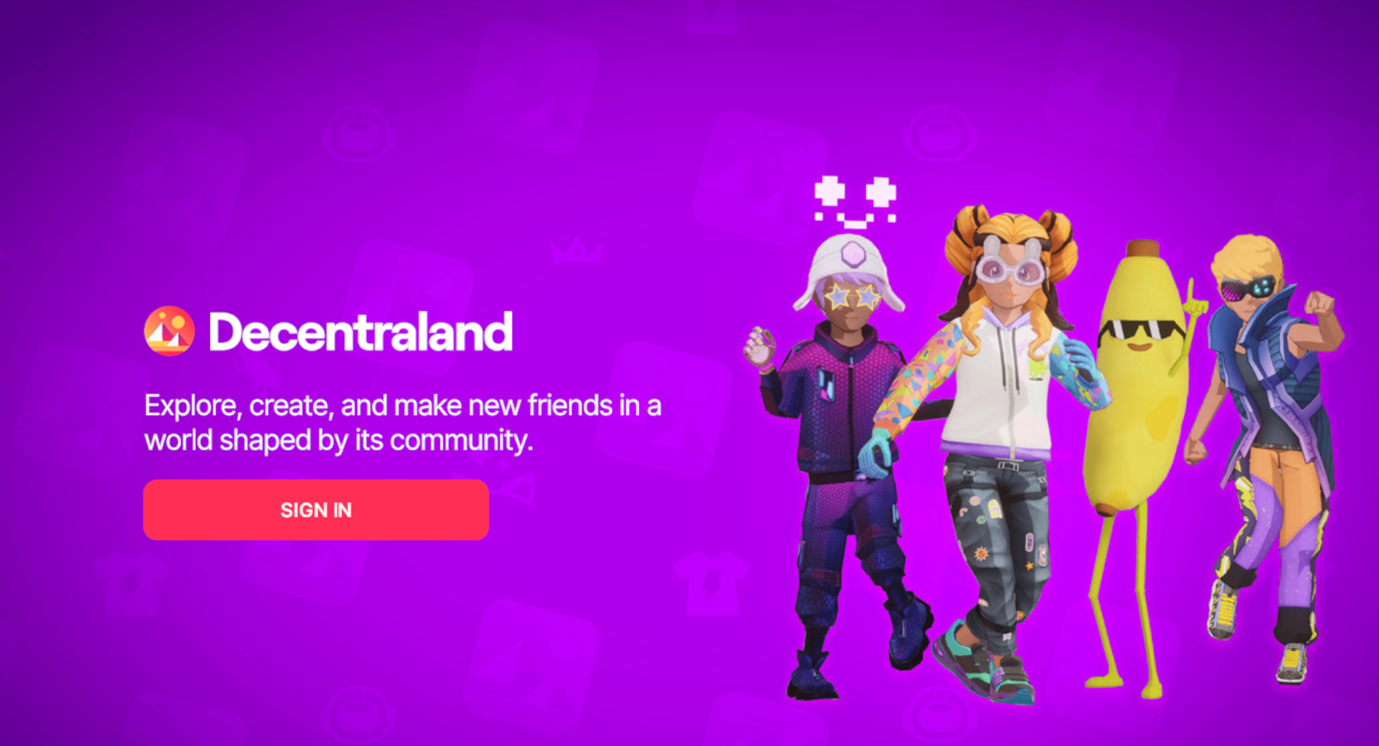
Several phases of web development
In common parlance Web3 and metaverse are often mentioned together, but they do not mean exactly the same thing. Rather, they are complementary concepts.
Web3 platforms are internet platforms built on the blockchain. It is a development phase of the Internet that aims to offer services that facilitate decentralised decision-making and commercial activity.
Core aspects of decentralised decision-making are making use of decentralised autonomous organisations (DAOs), using non-fungible tokens (NFTs) or cryptocurrencies for commerce that are authenticated through blockchains. (Sitra, 2023) The goal is to empower individuals and communities through technology and to break the hold that Web2 tech giants have on the current web landscape.
The aim of the early developers of Web3 was to invent a digital trust mechanism, also called cryptographic trust that would lead to societal change. (UNDP 2022) Previous versions of the internet are Web1 (1990-2005). This was the phase in the beginning of the internet era when web pages could only be read by users. The next phase, Web2 (2005-2020), is the phase we are in now where internet services are interactive. In Web2 we can both read content and contribute to the web by writing content ourselves through, for example, blogs. (UNDP, 2022)
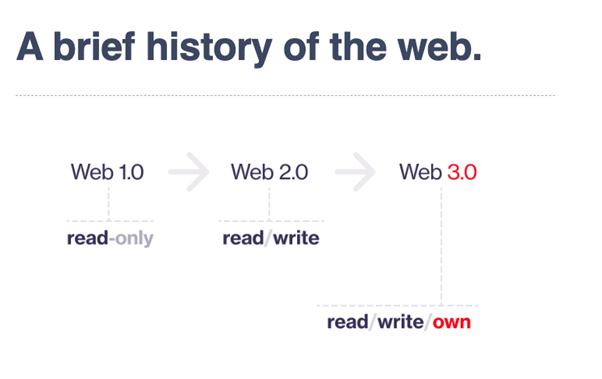
The metaverse is based on immersive technologies that make it possible for users to interact with virtual environments, digital objects and people. Immersive technologies include Virtual Reality (VR), Augmented Reality (AR) and Mixed reality (MR). Metaverse projects may use Web3 tools to support decentralisation of activities, but not all projects necessarily do so. There may be versions of the metaverse that look much like Web2 social media with the addition of new VR interfaces. (UNDP, 2022)
The term ‘metaverse’ was invented by author Neal Stevenson in 1992. It appeared in his science fiction novel Snow Crash. In the novel the metaverse was a parallel virtual reality universe created from computer graphics which allowed for global access and connectivity between users. (Stephenson, 2023)
Creating sustainability in Web3
When the subject of Web3 is taken up for discussion it often derails into a lament over the problems associated with it, usually related to the sustainability of the venture. There is concern over issues of privacy, digital security, illegal activity and environmental impact. These issues should not be overlooked, but is it really as bad as it sounds?
Let’s list the pros and cons.
If we start with the bigger picture, a big concern is how we have lost control over our own data and the content that is being fed to us. Large, centralised platforms rule over these issues and wield power over what we experience. Can we mitigate the stranglehold that these giant companies have on us?
Experts on Web3 provide us with a different, much more positive take on the new digital services that Web3 has on offer. Firstly, it is a decentralised option that is more open and secure than what we have now. In Web3 the users have control, interactions are trustless, blockchain technologies are used, storage is decentralised and networks function according to peer-to-peer principles.
Trustless interactions mean that participants can interact, transact or collaborate without needing to trust each other or a central authority. Trust is, instead, replaced by cryptographic guarantees and decentralised protocols. (Ferraro et al. 2023)
Ecological sustainability
There is no denying that the use of digital tools and digital platforms consumes vast amounts of energy, water and data storage facilities, as well as e-waste produced by all the hardware that is used.
As a professional within the cultural and creative sectors it is good to be aware of how you can act in a more environmentally sustainable way. Make greener choices from the start. Choose renewable energy, use blockchains that apply a Proof of Stake (PoS), rather than a Proof of Work (PoW) system. This will lead to a 99,9% decrease in energy use.
Another way to cut environmental costs of using Web3 is make sure to choose green programming options such as sustainable programming practices, carbon-neutral and carbon-negative blockchains, scalable design patterns, regenerative finance and token models.
Economic sustainability
As mentioned earlier, Web3 enables trustfree interactions between users and applications through the use of blockchain technology and cryptographic mechanisms, eliminating the need for centralized intermediaries.
From a historical perspective, the first step in the trust process is related to achieving cryptographic trust, which started with the creation of Bitcoin in 2009. Bitcoin made it possible for people to buy and sell crypto currencies.
Step two in the process was developing smart contracts that appeared on the scene when the Ethereum blockchain was launched in 2015. Smart contracts decentralise trust, so rather than banks being the centralised ledger of trust it is done through a computer code that is run in a trust-free manner. Trust is created by removing mediators from the transactions and is shifted to cryptographic proofs and decentralised protocols such as the Proof of Work and Proof of Stake protocols. Other blockchains have been developed since. (UNDP, 2022)
Several other innovations have followed suit such as decentralised finance (Defi), Non-Fungible Tokens (NFTs) and Stable coins, Decentralized Autonomous Organisations (DAOs), and Oracle protocols.
NFTs are unique and unlike currencies and Bitcoin they cannot be changed. They have been popularised as a way of owning one-off pieces of digital art and have also expanded into several other areas of use; the music industry, gaming, ownership in the virtual world, and Web3 governance through DAOs. (UNDP, 2022)
Social sustainability
Achieving social sustainability in the Web3 context is all about bringing about human-centric design in a decentralised ecosystem to ensure that technology serves people fairly, transparently and inclusively. Web3 gives us a unique opportunity to be more inclusive than we are in the physical world. It is not only the space itself, the fact that it is virtual, that allows for inclusivity in a different way. It is the use of avatars, that makes it possible for us to represent ourselves in any way we want. Also storytelling and communication practices all contribute to inclusivity. (Dias, 2025)
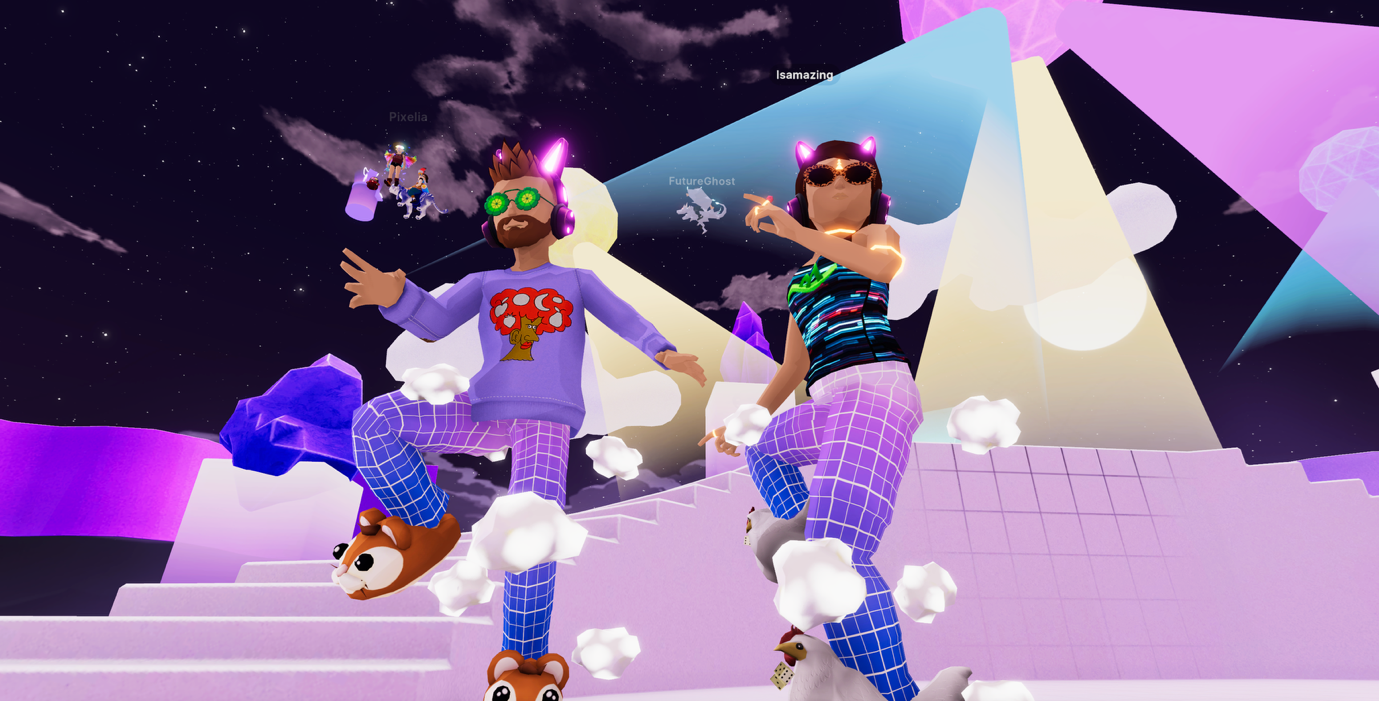
Social sustainability in the web3 context means ensuring that decision-making in DAOs is transparent and inclusive, where power is spread evenly among the DAO members. In terms of accessibility, platforms need to be designed so that participation is not limited by technical barriers or financial costs such as gas fees. The wellbeing of community members needs to be ensured through encouragement of a respectful discourse, preventing harassment and supporting collaboration. To feel safe individuals need to be able to fully control their own digital identity.
DAOs are central to the issue of social sustainability. They are the arena of action, advocacy and a sharing economy. According to statistics from 2022 there are 4000 DAOs that are used for a wide variety of purposes such as gaming, to generate NFTs, to provide venture funds, functioning as charities and providing virtual worlds. The appeal of communities, that they deliver real value and impact to their members, is what makes us join them also in the physical world. DAO members need to understand what the community stands for to ensure that they are actively involved as voters. Research shows (Faqir-Rhazoui, 2021) that participation in DAOs is very low. On average around 10% of token holders participate in voting. (Guida, 2022)
Cultural sustainability
Cultural sustainability in Web3 focuses on preserving, promoting and evolving cultural identities and practices in decentralised spaces. The goal is to ensure cultural diversity and continuity in digital environments while allowing for actors and activities to evolve creatively.
Key areas where cultural sustainability can have a significant impact in the arena of digital heritage is in the archiving and sharing of cultural artifacts using NFTs or decentralised storage. Virtual platforms can also be used to support diverse linguistic and artistic representation and to support indigenous sovereignty by empowering communities to control how their cultural data is used and shared. It can lead to cultural innovation by enabling new forms of storytelling, art and ritual in virtual worlds.
A more detailed description of cultural sustainability in Web3 is found in this blog post.
Dare to dive
As everything is changing so fast within this area, getting stuck on a term like Web3 may not be wise. Using a broader term, that holistically embraces an emerging field, like ‘emerging technologies’ or ‘the new internet’, may be the way forward.
Finally, we need to keep in mind that because of the rapid pace of development in Web3 it is good to follow how this new arena of work and leisure is progressing so that we don’t miss out on the potential it has for professionals working in the cultural and creative sectors.
Dive in, get your feet wet. You may find new, surprising earning opportunities.
Resources and further reading
Dias, Iara (2025). Slide deck on Web3 communities, produced for the Lume project.
Ferraro C., Wheeler M.A., Pallant J.I, Wilson S.G & Oldmeadow J. (2023), Not so ‘trustless’ after all: Trust in Web3 technology and opportunities for brands, Business Horizons, https:// doi.org/10.1016/j.bushor.2023.01.007.
Guida, Paolo (October 14, 2022) The State of DAOs and What That can Mean for Web3. Forbes Finance Council. Seen 1.12.2025.
Sitra 2023. Miten kestävää maailmaa web3.0 rakentaa? Puheenvuoroja hajautetun verkon merkityksestä ympäristölle, taloudelle ja yhteiskunnalle. Muistio 29.8.2023.
UNDP (2022). UNDP RBAP: #Web3for2030. New York, New York.
Lehikoinen, K., Pantsar, M., Kalmari, H., and Toivonen, L. (2023). Ympäristö ja Web 3.0. In Miten kestävää maailmaa web3.0 rakentaa? Puheenvuoroja hajautetun verkon merkityksestä ympäristölle, taloudelle ja yhteiskunnalle. Muistio 29.8.2023. Sitra.
Stephenson, Neal (2023). MAS.S61 public lecture on the metaverse. Lecture 21: Neal Stephenson Author of Snow Crash; coined the term “Metaverse”.
https://www.youtube.com/watch?v=GiZs7s-bbSI
More blog posts within the Lume Web3 project can be found on the project website .
Culture and Media blog
In a whirlwind of change, and a sea of possibilities, contributors to the Culture and Media blog explore and make meaning of our dynamic field.
