
Maritime heritage sites and sustainable approaches – insights from the CHARLO intensive programme in Åland Islands
Published : 16.03.2026 / Blog / Publication
In this blog post we describe how we approached the task of creating circular solutions and socially sustainable solutions for Sjökvarteret in Åland Islands.
Background
Initiating circular economy principles in maritime regions like Åland Islands, where both the maritime heritage and tourism are important, can strengthen both environmental and social sustainability. A holistic view and a move from linear business models to circular business models seem to be a necessary step forward. This can, at the same time, generate cost savings, generate income help create new local jobs (Zorbas et al, 2021). A circular economy (CE) encourages reuse, repair, and recycling to minimise waste and extend product lifecycles (European Union, 2023). Social sustainability, on the other hand, focuses on managing economic impacts on people and quality of stakeholder relationships ( United nations, 2025b). Here a complete and multi-directional value chain thinking is crucial and local authorities are to be seen as important stakeholders. They can provide economic incentives, strategies, policy or promote and award collaborative initiatives among actors in the context (Zorpas et al, 2021; Manniche et al, 2017.)
Åland, the largest maritime cluster in the Northern Baltic, is vital to the regions economy and identity (Björklund, 2025). Integrating circular and social sustainability in this context supports cultural heritage, economic development, and environmental protection of Åland. These themes align well with several UN Sustainable Development Goals (SDGs). Inclusive economic growth and sustainable tourism are supported by SDG 8, while SDG 12 supports responsible consumption and production, and SDG 14 emphasises the protection of marine ecosystems, critical in island contexts like Åland. SDG 17 reinforces the importance of partnerships in an integrated setting (United Nations, 2025a). Together, these goals support for a sustainable maritime heritage.
The IP CHARLO (Change Agents for Regional and Local Organisations) initiative, funded by Nordplus Higher Education, aimed to educate and engage students in practical sustainability and community resilience projects across the Nordic and Baltic regions. A key objective of the initiative was to introduce innovative sustainable solutions to a client in a selected region. In the spring 2025 initiative we worked with Sjökvaretert in Mariehamn, Åland. Additionally, the initiative bolstered networking within the EkoTekNord network and facilitated knowledge exchange between universities and companies in the selected regions. A total of 40 students from Finland, Estonia, Sweden, Latvia, Lithuania, Iceland, Denmark, and Norway participated in the IP CHARLO programme 2025.
The context and the client - Sjökvarteret’s role and needs
Sjökvarteret, is a vibrant maritime heritage site that honors the region’s long seafaring tradition. It functions as a cultural meeting point with a working shipyard, traditional wooden boat building, artisan workshops, a maritime museum, and seasonal events. For both locals and visitors, it offers a living connection to Åland’s coastal identity. (https://sjokvarteret.ax/ )
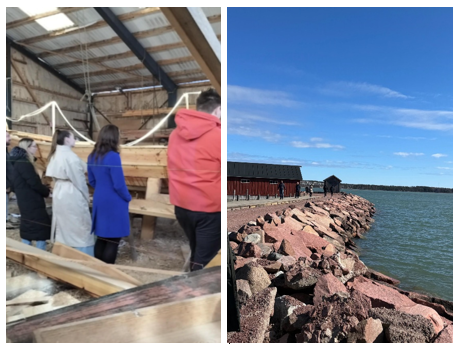
The site is managed by a small team of passionate individuals and volunteers committed to preserving and revitalising the maritime heritage of the region. In recent years, there has been growing interest in expanding Sjökvarteret’s role, from a heritage site to a platform for innovation, community engagement, and sustainability. This aligns with Åland’s broader goals to develop sustainably, especially through circular economic principles and inclusive cultural development. (Government of Åland, 2024)
The problem
The aim of this CHARLO 2025 initiative was to explore how principles of circular economy (CE) and specifically social sustainability can help address sustainable development while honoring the site’s unique identity.
Despite its cultural value and unique character, Sjökvarteret faces challenges that might limit its development and long-term sustainability. After local interviews and after doing research about this place, we identified some challenges, i.e., problems, to work around:
- Financial constraints: The organisation is heavily reliant on seasonal tourism income, sporadic sponsorships, and limited public funding. This financial fragility makes it difficult to invest in long-term planning, infrastructure upgrades, or innovation.
- Seasonal visitor fluctuation: Most visitors come during the short summer season, leaving the site underused for much of the year. This seasonality makes it difficult to maintain consistent activity, staffing, and income throughout the year.
- Limited local engagement: While Sjökvarteret is well-known, its activities have not largely engaged the wider Åland community. There is untapped potential for greater participation from residents, schools, craftspeople, and underrepresented groups.
- Human resource limitations: The site depends on a small core team, with limited capacity to manage operations, develop new initiatives, or build strategic partnerships. This can make it difficult to fully activate space or scale up sustainable practices.
Method and process
Applying circular economy tools
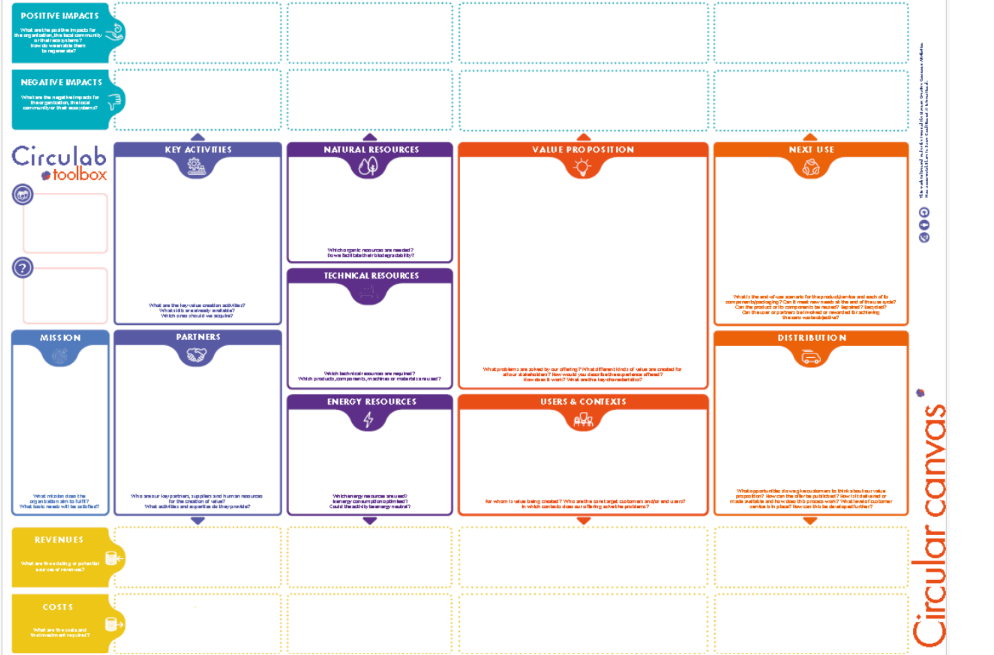
For this project and to find solutions to the problems we used three key circular economy tools from Circulab (2024). The value chain canvas provides a clear overview of the entire value chain. This tool helps identify the market’s major value creation needs. The partner map creates a visual presentation of the relationship between the business and its stakeholders. It helps to understand the stakeholder’s interests, establish strong relationships, and overcome potential challenges. To develop sustainable solutions, The Circular canvas (Circulab, 2024, Figure 1) was used. It enables mapping the project’s components and raising awareness of its impacts. These tools assist in building solutions that meet all needs while creating a positive environmental and social impact. (Circulab, 2024)
Process
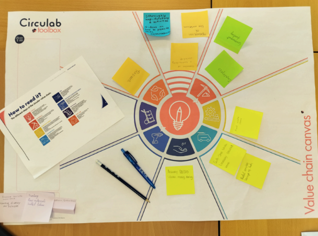
All teams began with a client visit to Sjökvarteret to experience the real-world context. Using the value chain canvas (Figure 3 and 4), the team identified key activities and gaps in the existing system. As the week progressed, stakeholder relationships were mapped using the Partner map, visualising a wider picture of the organisation. This led the team to work with the Circular canvas, where the group explored social, environmental, and economic impacts of the foundation’s activities. The process encouraged participatory discussions among team members and with local people at Åland. These conversations brought valuable context to cater to real community needs. By the end of the week, insights were blended into actionable ideas and presented to the commissioner Sjökvarteret.
Proposed strategies and solutions
Building on the insights gathered during the visit and from dialogues with Sjökvarteret’s team and our research into the problem and the context in general we identified several strategic directions that could help strengthen circular economy practices and social sustainability within the context of maritime heritage. Some of the results are explained below.
Strategic partnerships
Build strategic partnerships for funding and capacity. For example, collaborating with local businesses and municipalities to co-finance sustainable renovations or pilot programs. To supplement human resources, they can create volunteer and internship programs with universities and vocational schools while building capacity in circular and heritage-based innovation.
Educational workshops of circular crafts
Reuse of wood waste from boat production was proposed for making miniature sailing boats. These handcrafted items serve as both souvenirs and educational tools. The concept was further developed as interactive workshops, subject to a fee. These sessions offer hands-on learning in traditional skills and maritime culture. Additional ideas included gamification elements and thematic workshops on sea safety, painting, and woodworking.
Improving accessibility and digital engagement
Accessibility emerged as a common idea during the workshop. Multiple groups emphasised translating sign boards and visitor information into English to ensure broader inclusivity. Enhancing digital presence through active engagement on platforms such as Instagram and Tik Tok, with content in English, was identified as vital to reach younger and global audience. Physical accessibility improvements for individuals with disabilities were also suggested.
Rebranding for visibility
A rebranding strategy was proposed to give Sjökvarteret a more accessible, internationally comprehensible identity. The inclusion of a tagline such as “Sjökvarteret - The Sailing Village” aims to make the location attractive to non-Swedish speakers. The emphasis was placed on names that are easy to pronounce, memorable, and reflective of the site’s cultural heritage. Additionally, redesigning the website to improve usability, highlight events, and integrate booking or donation features, using digital storytelling tools (e.g., short videos, interactive timelines, podcasts) to communicate the site’s heritage, values, and ongoing transformation.
Volunteer programs for mutual benefit
A structured volunteer program was proposed to foster stronger community involvement while keeping operational costs minimal. University students and skilled local residents can participate in projects that benefit both the individual and the foundation. For example, students from IT departments could contribute by developing an audio guide or upgrading the website as part of their courses. This model creates a win-win situation by combining local talent and educational resources with the foundation’s needs.
Annual festival for community engagement
To enhance visibility and generate income, organising an annual summer festival centered around maritime traditions was suggested. This event could feature boat building competitions, and local vendor participation attracting both locals and tourists. This initiative aims to strengthen community involvement, generate income, and reinforce the cultural identity and sustainability of Sjökvarteret.
Conclusion – achieving social sustainability through circular practices
Through our collaborative work during the project, we explored how circular economy can be applied to promote social sustainability in the maritime heritage of Åland. As a diverse group, we brought together diverse cultural insights and academic backgrounds to address the needs of Sjökvarteret. Our primary focus was on identifying practical solutions that combine cultural heritage with circular practices, such as workshops using reused materials, improved accessibility, and volunteer engagement.
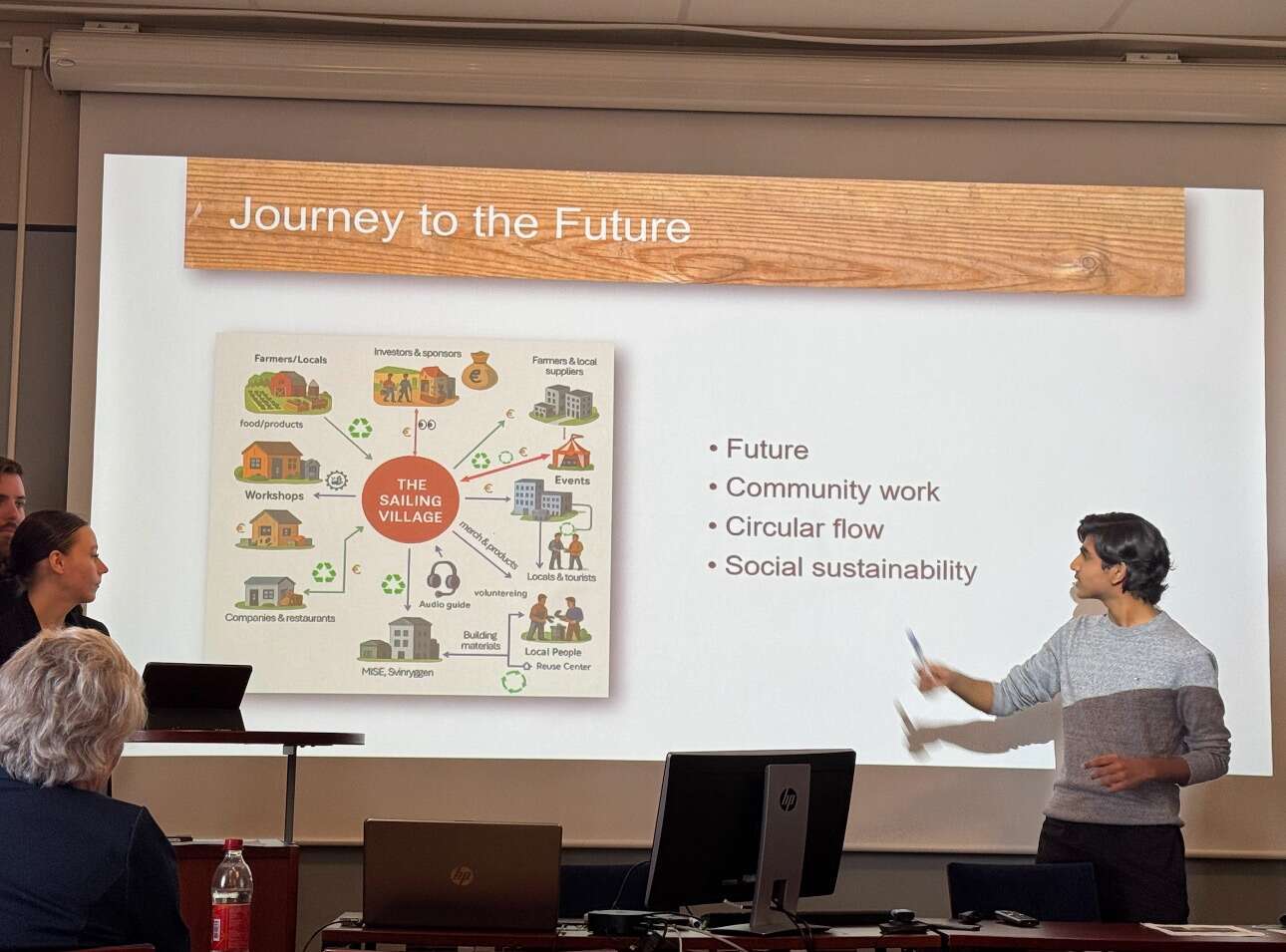
We engaged in participatory discussions with stakeholders and used circular economy tools like Circular Canvas (Circulab, 2024), to turn diverse insights into actionable strategies. Our contribution aimed at creating meaningful outcomes that enhance social sustainability through education, community involvement, and environmental awareness.
This experience deepened our understanding that circularity is not just about managing resources, it is a powerful way to build stronger, more connected, and resilient communities.
The next CHARLO program is now launched and we look forward hearing from a new group of change agents who this time, in spring 2026, will work together on sustainability project in Oslo, Norway.
Authors
Dilumi Bamunu Arachchige, International Business student, Arcada UAS
Lalani Subashini, International Business Student, Arcada UAS
Phuong Nhi Thai, International Business student, Arcada UAS
with
Christa Tigerstedt, PhD, Principal lecturer School of Business and Healthcare, Arcada UAS
References
Björklund, C. (2025). The special importance of the shipping industry for the Åland Islands - The Baltic Sea. https://itameri.fi/en/from-experts-pen/the-special-importance-of-the-shipping-industry-for-the-aland-islands/
Circulab. (2024). Toolbox circulab: Circular Canvas, Partner Map, Value chain canvas. https://circulab.com/fr/toolbox-circular-economy-fr/
European Parliament (2025). Circular economy: definition, importance and benefits. Accessed June 4.6.2025: https://www.europarl.europa.eu/topics/en/article/20151201STO05603/circular-economy-definition-importance-and-benefits
Government of Åland (2024). Everyone Can Florish on the Island of Peace: Åland Voluntary Review 2024. https://sdgs.un.org/sites/default/files/vlrs/2024-06/voluntary_local_review_aland_2024.pdf
Manniche, J., Larsen, K. T., Broegaard, R. B., & Holland, E. (2017). Destination: A circular tourism economy: A handbook for transitioning toward a circular economy within the tourism and hospitality sectors in the South Baltic Region. Copenhagen: Centre for Regional and Tourism Research.
Sjökvarteret. https://sjokvarteret.ax/
United Nations. (2025a). THE 17 GOALS. Sustainable Development. https://sdgs.un.org/goals
United Nations (2025b). Social Sustainability. Accessed 4.6.2025. https://unglobalcompact.org/what-is-gc/our-work/social
Zorpas, A. A., Navarro-Pedreño, J., Panagiotakis, I., & Dermatas, D. (2021). Steps
forward to adopt a circular economy strategy by the tourism industry.
Waste Management & Research, 39(7), 889–891. https://doi.org/10.1177/0734242X2110290…
Ålands landskapsregering (2025). Accessed 15.4.2025. https://www.naringsliv.ax/vi-jobbar/hallbarhet.
Higher Ed blog
Here you can read about Arcada's interdisciplinary research initiatives, open science and other general, current topics in higher education.
