
A passage into cultural sustainability in Web3
Published : 22.12.2025 / Blog / Publication
In a time of global crisis, the only thing that is certain is constant change. A multitude of sectors and groups in society are trying to deal with the crisis. One such sector is the cultural heritage sector. Our world is full of cultural heritage that needs to be preserved: artifacts, knowledge, sites, buildings, monuments. Climate change, wars and the sheer volume of heritage that we should preserve makes this into an enormous task.
We simply do not have the physical space or resources to store all of it and unexpected events such as extreme weather conditions, earthquakes and violent conflicts will lead to the destruction of these resources of humankind. So how do we best preserve what we still have left?
One viable solution is digitising material and immaterial heritage and storing it through decentralised technologies in Web3. It is a viable option because it means different groups and communities can retain stewardship over heritage resources, also enabling diverse groups to interact with likeminded individuals on a global scale. Groups, such as indigenous communities, that previously have had less space to affect global decision making can in the Web3 context have a stronger voice. In the new internet they can affect decision making, also spread and share indigenous wisdom.
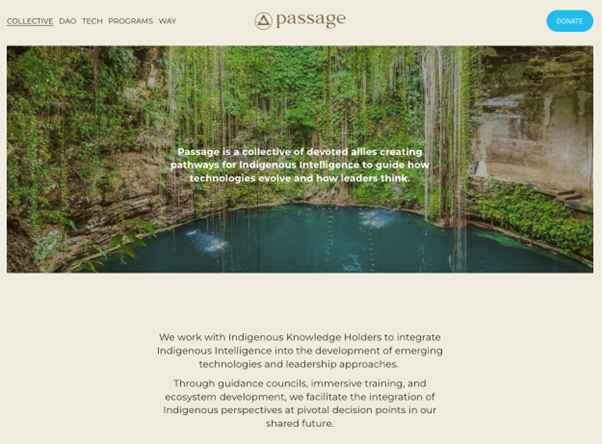
The PassageDAO – empowering indigenous communities
“This indigenous-led economic model creates pathways towards global communication and regeneration, fostering symbiotic networks between human communities and the living world that sustains us.”
This statement was included in the Black Paper of the Passage Decentralised Autonomous Organisation (DAO). (Passage DAO, 2025) The new model, mentioned in the above quote, has been built in Web3. The DAO initiators have wished to transform how we use indigenous knowledge for policy making purposes and how we can preserve this knowledge by using a regenerative economic model.
For indigenous people around the world, the need to create an alternative, indigenous-led parallel economy for planetary stewardship is long overdue. This is now possible in the form of Decentralised Autonomous Organisations like Passage and the use of HALO, the DAO’s dynamic reputation currency. The Halo token values wisdom-based contribution, in other words, how well activities align with indigenous directives and how well these can be verified. (Passage Collective, 2025)
The main aim of Passage DAO is to build a functional framework in the Web3 context that enables governing, guiding and shaping planetary decision making based on indigenous wisdom that honours our interdependence with all life.
How does this work in practice? By using on-chain (blockchain) directives, NFTs (non-fungible tokens), a reputation-based economy, and a federated governance model. These together will make it possible to create a verifiable, participatory system that embeds indigenous intelligence to make an impact in the real world. Web3 is thus used to empower indigenous communities by preserving cultural knowledge and building regenerative economies rooted in ancient wisdom. (Passage DAO, 2025)
Regenerative economies? These are economies built on decentralised technologies like blockchain, tokenisation and decentralised finance. The aim of regenerative economies is to restore, renew, and enhance social, environmental, and economic wellbeing and thus change the way things are working in society. What about NFTs? They are digital stamps built on a blockchain that can be used to certify ownership of a digital asset like a video, avatar or image. The stamp is traceable back to the origin and it cannot be copied, which ensures the authenticity of the digital asset.
How does cultural sustainability work in Web3?
Many communities today do not have control over the cultural narratives that belong to their communities. These are often controlled by centralised institutions, which may result in communities not having direct, long-term access to cultural expressions. Through DAOs, blockchain technology and NFTs they can curate and manage their own heritage collections. At present, in the physical world, ownership over these assets may be unclear and there is often a lack of transparency surrounding this issue.
Within the art sector, and, for example, when it comes to art created by indigenous artists, minting their work as NFTs allows them to retain ownership, receive royalties and share their culture on a global level without being dependent on intermediaries.
DAOs are formed by cultural groups so that they can collectively manage digital archives, which ensures democratic governance and long-term preservation of the archives. Virtual cultural spaces can be created in Web3 where cultural rituals, performances and storytelling take place interactively, often for specific communities and also built by them.
DAOs are deemed to be particularly successful governance models within indigenous communities because decentralisation as a concept is culturally rooted in these groups. They are already applying several mechanisms that are crucial to the smooth functioning of DAOs such as rituals of trust and consensus, mechanisms that ensure accountability without resorting to punishment, slower pacing of activities that gives space for deliberation, and deep commitment to relationships, land and memory. (ASDI, 2025)
Coding culture
Another example of an NFT project used for the social good is the startup Quantum Temple , founded in 2022. Quantum Temple documents culture and traditions in the form of NFTs with a mission to raise awareness and to appeal to groups and people that wish to support heritage communities. (Speirs, 2024) The startup has, for example, video recorded the traditional Cendrawasih dance on Bali and preserved it for coming generations on the Ethereum and Algorand blockchains, basically creating a visual anthropology archive that is stored and accessed on new digital spaces. Which cultural assets to document are chosen in consultation with an anthropologist and community groups. Proceeds from the NFTs are channelled back into these communities. The Quantum Temple team assists them in opening crypto wallets to deposit the funds in, thus supporting them in revitalising their own culture. (Hernandez, 2022) The NFTs provide unique experiences for tourists and thus contribute to a renewal of the tourism industry in Bali through regenerative tourism initiative. (Sui Foundation, 2024)
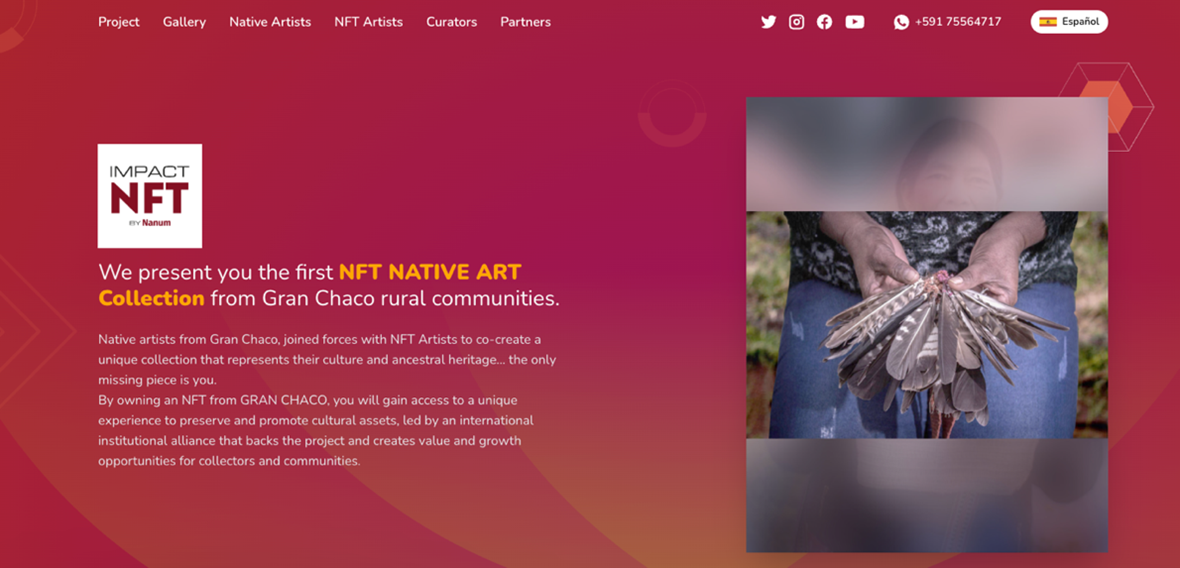
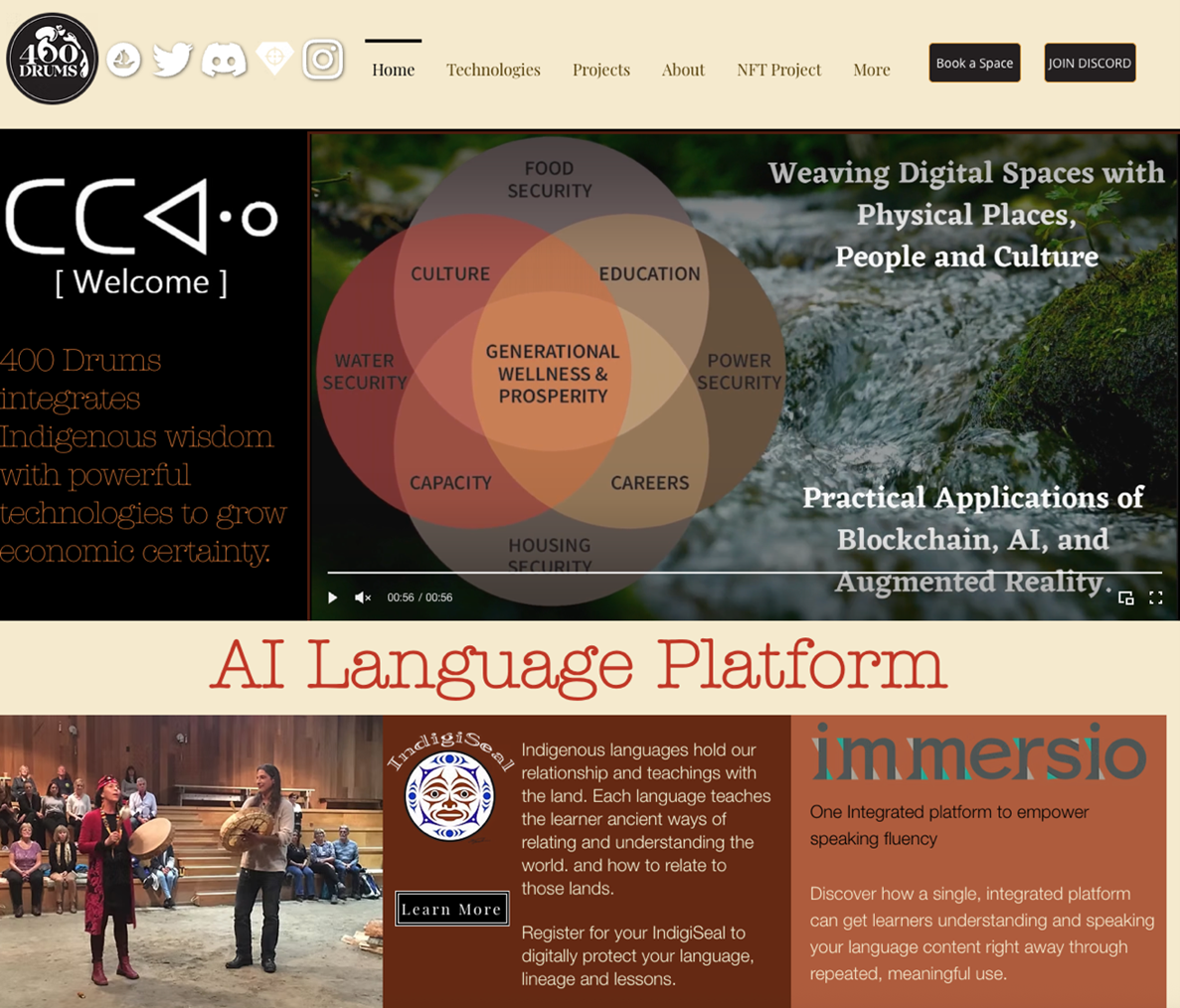
There are numerous other indigenous-led NFT projects like 400 Drums , IndigeNFT , (IN)FTS – Ngarra Nonprofit Project , Turtle Island NFT , ImpactNFT – Gran Chaco Culture and many more. Just dig, you’ll find loads of interesting initiatives. (Crypto Altruism, 2024)
Web3 promoting and preserving cultural heritage
As noted, there are numerous ways in which Web3 can be used to preserve and promote cultural heritage through the digitisation of artifacts and using blockchain to ensure that transparent and immutable records of ownership exist, a process that is crucial for verifying the legitimacy of cultural items.
Digitising content also enables broader audiences to engage with cultural heritage virtually, making it accessible to people who cannot physically attend museums and cultural heritage sites. In addition, through the sale of NFTs, and royalties from secondary sales, institutions working with preservation and education can have a sustainable form of funding. (Almeda, 2024)
This is a model that could be applied to indigenous groups in Finland. Here I see a clear role for cultural producers as curators of these types of processes. Spreading awareness and nudging cultural producers into realising the potential of Web3 as an arena for democratic governance of cultural assets is something that needs to be encouraged. Arcada is a partner of The Creatives in the Web3 era – Lume project , that aims to do precisely this.
Will Web3 be the vanguard for a new planetary system that allows different groups and communities to have stewardship over heritage resources and to provide them with an arena for dialogue, sharing and decision-making? We can only hope so and only time will tell how rapidly this will become the default mode of governance and one that is truly inclusive and user-lead.
Resources and further reading
Almeda, Parra (June 11, 2024). NFTs and Digital Cultural Heritage: The Future of Preserving Unique Artifacts. Michael Culture. Seen 8.10.2025.
https://www.michael-culture.org/nfts-an…
Applied Design and Strategy Institute- ASDI (2025). Decentralized Futures: What Web3, Cooperatives and Indigenous Governance teach us About Design. Seen 8.10.2025.
https://adsidesign.org/blog/2025/03/01/…
Crypto Altruism (May 3, 2023). Three Indigenous-led NFT Projects elevating Indigenous art and culture. Crypto Altruism Blog. Seen 8.10.2025.
https://www.cryptoaltruism.org/blog/thr…
Hernandez, Ornella (December 24, 2022). 6 projects using NFTs for Social Good. Blockworks. Seen 8.10.2025.
https://blockworks.co/news/nfts-for-soc…
Passage DAO (2025). Black Paper. Seen 8.10.2025.
https://www.hoam.earth/passage-dao-blac…
Passage Collective (2025). Seen 8.10.2025.
https://www.passagecollective.com/passa…
Speirs, Edward (January 5, 2024). Quantum Temple: Leveraging Emerging Technologies to Preserve Balinese Culture. NOW Bali. Seen 8.10.2025.
https://www.nowbali.co.id/quantum-templ…
Sui Foundation (April 12, 2024). Quantum Temple Champions regenerative tourism through NFTs. Seen 8.10.2025.
https://blog.sui.io/quantum-temple-nft-regenerative-tourism/
More blog posts within the Lume Web3 project can be found on the project website .
Culture and Media blog
In a whirlwind of change, and a sea of possibilities, contributors to the Culture and Media blog explore and make meaning of our dynamic field.
